
What Is the Septuagint?
Discover the Greek Jewish scriptures that connected ancient readers, shaped early Christian writing and still open questions about the history of the biblical text.
MEMBER RESEARCH EDITIONSee the additional member research ↓
A translation that helped shape the Bible’s journey.
Jewish translators carried scripture into the Greek-speaking world, beginning with the Torah in the third century BCE. Other books followed across different periods and settings. These Greek texts became important in Jewish life and early Christianity, and they preserve a major strand of biblical textual history.
What does the name mean?
Septuagint means “seventy”; LXX is its Roman-numeral abbreviation. The name recalls the ancient account of seventy-two translators working on the Jewish law. Today it commonly refers to the wider Greek biblical tradition, including translations, revisions and works received differently among religious communities.
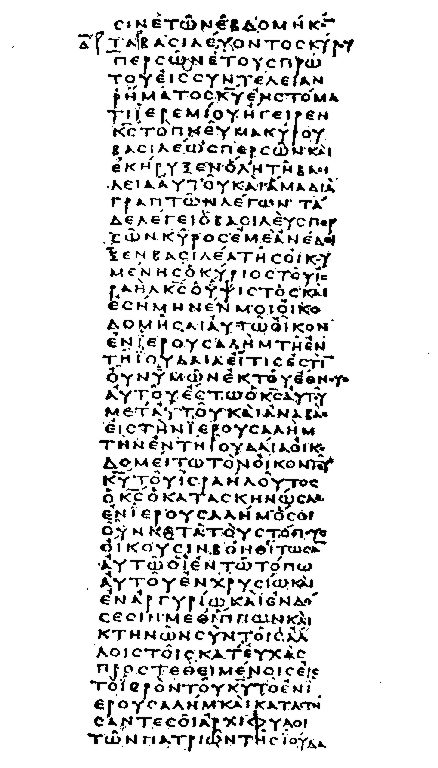
Why compare it with Hebrew?
A Greek passage can preserve a translator’s choices, reflect a different Hebrew form, or carry changes made during later Greek transmission. Scholars compare specific passages and witnesses to investigate those possibilities. The member edition below follows actual manuscripts and the different forms of Jeremiah.
Compare the books in different biblical collections →Follow another thread
The Bible’s history is a network: manuscripts, languages, communities, scholars, and technologies continually intersect.
Follow the Bible across languages
Ancient versions, Latin, printing, and English.
Explore →HEBREW BIBLE / OTFollow the Hebrew textual tradition
Scrolls, collections, codices, and transmission.
Explore →MANUSCRIPTSSee how texts were copied and compared
Explore witnesses, variants, and textual criticism.
Explore →