
The Bible Directory · Questions Worth Exploring
What Were “High Places” in the Bible?

A familiar English phrase raises several different questions about location, worship, and the writers describing it.
What we know
The Hebrew word often translated “high place” is bamah; its plural is bamot. In 1 Kings 3:2–4, Solomon offers sacrifices at Gibeon. Later, 2 Kings 23 describes Josiah suppressing high places. These passages do not present every local sanctuary in the same narrative setting. Read the surrounding verses before assuming that the label always names the same activity.
Where scholars disagree
Identifying an excavated shrine as a particular biblical bamah requires argument, not just an altar or an elevated location. Scholars also debate how archaeological changes at shrines relate to accounts of royal reforms. The research study linked below explores why classifications of religious architecture need care. [1]
What remains uncertain
We cannot recover the beliefs of every worshipper or confidently attach every abandoned sanctuary to a named king’s reform. A building’s remains and a narrative about worship answer related but different questions.
Worth a closer look
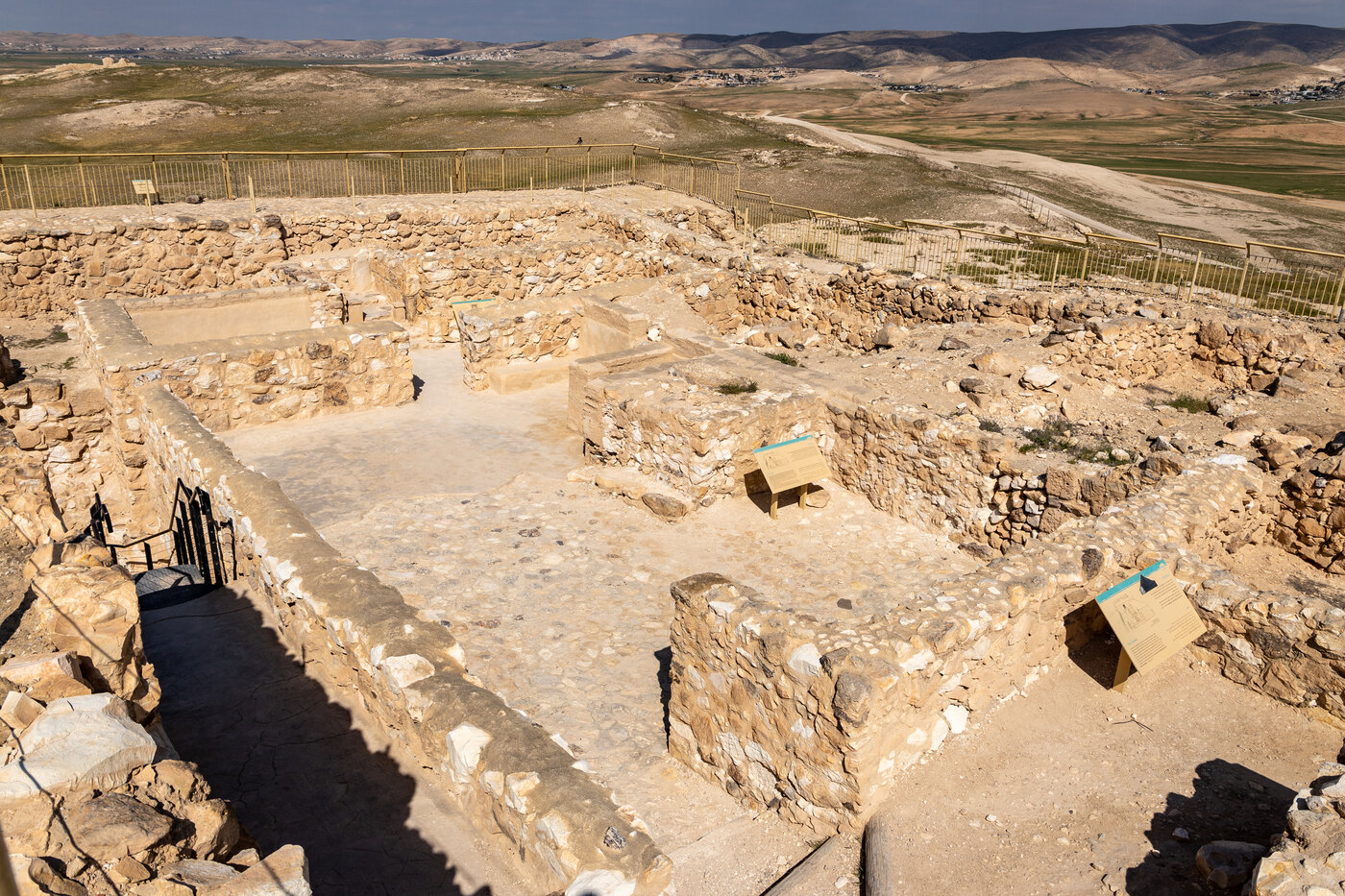
Explore the Judahite sanctuary at Tel Arad through the Israel Nature and Parks Authority [2]. Distinguish excavated remains from modern reconstruction. Arad is a useful comparison for worship outside Jerusalem; it is not a universal blueprint for every “high place.”
Try it yourself
Compare 1 Kings 3:2–4 with 2 Kings 23:8–9. Who acts, what activities are named, and how does each narrator evaluate them? Keep those observations separate from the archaeological identification of a site.
Read the related chapters
Research Paths
[1] Research article — Between Rocks and “High Places” (University of Liverpool repository) · Read the publisher’s full text
[2] Israel Nature and Parks Authority — Tel Arad National Park
Christine Hayes, Open Yale Courses — Deuteronomy and the centralization of worship ↗
Lecture and transcript. Use the discussion of centralized worship as one scholarly account, alongside the archaeological classification study and the Tel Arad site record.
Biblical passages linked above are primary texts for the reading exercise. Outside resources supply the historical comparisons; they may use different terminology or perspectives.
Keep exploring this question
Follow these paths into the Directory’s existing guides.