
1 Thessalonians 1
1 Paul, and Silvanus, and Timotheus, unto the church of the Thessalonians which is in God the Father and in the Lord Jesus Christ: Grace be unto you, and peace, from God our Father, and the Lord Jesus Christ.
2 We give thanks to God always for you all, making mention of you in our prayers;
3 Remembering without ceasing your work of faith, and labour of love, and patience of hope in our Lord Jesus Christ, in the sight of God and our Father;
4 Knowing, brethren beloved, your election of God.
5 For our gospel came not unto you in word only, but also in power, and in the Holy Ghost, and in much assurance; as ye know what manner of men we were among you for your sake.
6 And ye became followers of us, and of the Lord, having received the word in much affliction, with joy of the Holy Ghost:
7 So that ye were ensamples to all that believe in Macedonia and Achaia.
8 For from you sounded out the word of the Lord not only in Macedonia and Achaia, but also in every place your faith to God-ward is spread abroad; so that we need not to speak any thing.
9 For they themselves shew of us what manner of entering in we had unto you, and how ye turned to God from idols to serve the living and true God;
10 And to wait for his Son from heaven, whom he raised from the dead, even Jesus, which delivered us from the wrath to come.
World Behind This Chapter
Explore the people, places, language, history, and material world connected to 1 Thessalonians 1.
What does the joint greeting tell us about the senders?
1 Thessalonians 1:1 names Paul, Silvanus and Timothy. Compare the plural voice with the later shifts to a singular I. The greeting identifies associates but does not assign every sentence to one speaker, identify a scribe or establish a modern co-authorship arrangement.
Why is this letter commonly dated around 50–51 CE?
The early date is reconstructed from the letter’s movements and messengers alongside Acts and wider Pauline chronology. Compare 3:1–6 with Acts 17–18 rather than treating the modern date as a number printed in the greeting. The precise year and the details of synchronizing the accounts remain matters of historical argument.
How are faith, love and hope paired with activity?
In 1:2–5 faith, love and hope are associated with work, labor and endurance within thanksgiving. Track these pairings before reducing them to three isolated dictionary entries. The account describes the senders’ assessment, not an itemized record of each recipient’s conduct.
WORTH A CLOSER LOOK
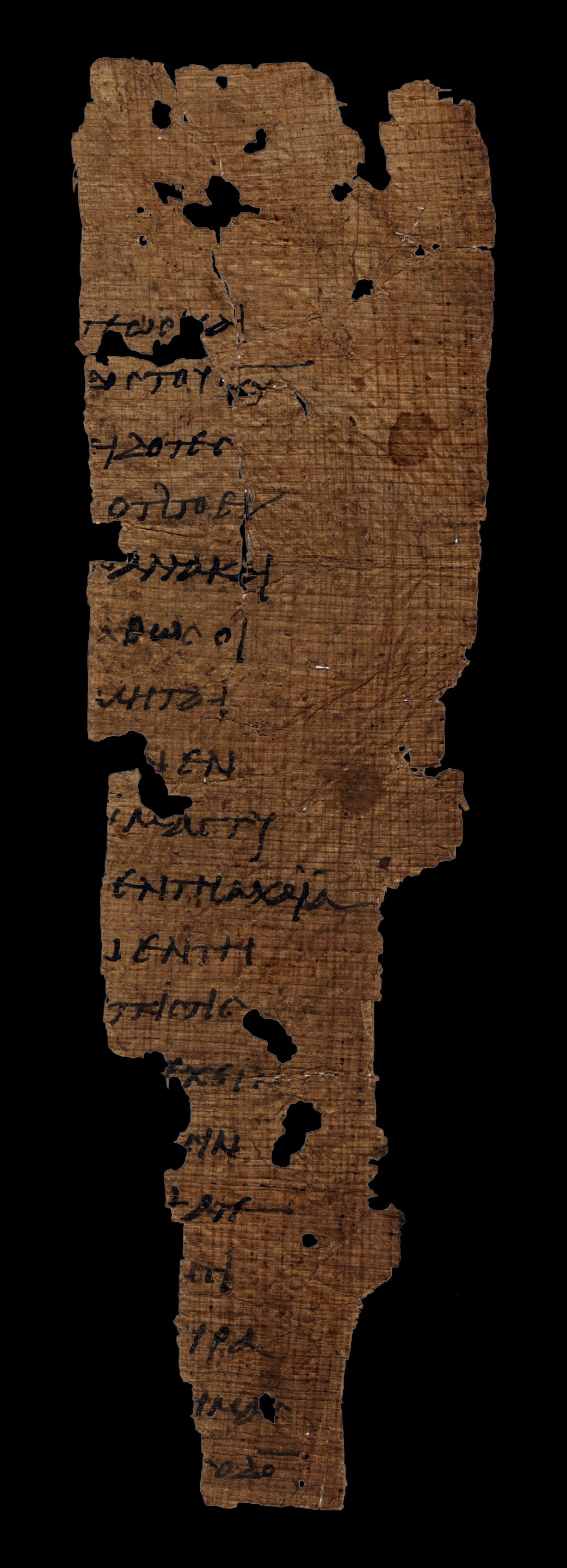
Papyrus 65: fragments from an early copy of 1 Thessalonians
These real fragments preserve portions of the Greek text across 1 Thessalonians 1:3–2:1; the other side preserves parts of chapter 2. Notice how loss of the edges leaves incomplete lines rather than a complete printed page. PSIonline catalogues a third-century CE copy and records a fourth-century dating proposal, approximately 200–400 CE across those estimates. That is substantially later than the letter’s approximately 50–51 CE setting. This is not Paul’s autograph, and missing letters require careful comparison with other witnesses.
Explore the historical sourceResearch PathsCurated links for exploring this chapter 3
History & Daily Life1
- Explore the city through its archaeological museumArchaeological Museum of Thessaloniki · Thessaloniki, the Metropolis of Macedonia
Investigate the city’s urban space, population, occupations, cults and burial practices. Date individual objects and monuments separately rather than assuming that all exhibited material belongs to the letter’s time.
Language & Literature1
- 1 Thessalonians 1: translation and textual notesNET Bible
Compare the KJV with the translation and manuscript notes. Distinguish textual readings, translation decisions and historical proposals; commentary offers arguments rather than additional statements in the letter.
Artifacts & Manuscripts1
- Read the catalogue record for Papyrus 65PSIonline · PSI XIV 1373, inventory 2491
The Italian-language record supplies contents, dimensions, collection information and bibliography. It catalogues a third-century date and notes a fourth-century proposal; manuscript dates and reconstructed codex relationships should remain open to reassessment.
Explore the full chapter collection
Directory Members can explore all the available questions, closer-look items, and curated links for this chapter.
Public Discussion
Your display name and comment can be seen by anyone visiting this chapter. Do not include private or sensitive information. Read the Community Guidelines.
You must be logged in to post a comment.