
1 Timothy 6
1 Let as many servants as are under the yoke count their own masters worthy of all honour, that the name of God and his doctrine be not blasphemed.
2 And they that have believing masters, let them not despise them, because they are brethren; but rather do them service, because they are faithful and beloved, partakers of the benefit. These things teach and exhort.
3 If any man teach otherwise, and consent not to wholesome words, even the words of our Lord Jesus Christ, and to the doctrine which is according to godliness;
4 He is proud, knowing nothing, but doting about questions and strifes of words, whereof cometh envy, strife, railings, evil surmisings,
5 Perverse disputings of men of corrupt minds, and destitute of the truth, supposing that gain is godliness: from such withdraw thyself.
6 But godliness with contentment is great gain.
7 For we brought nothing into this world, and it is certain we can carry nothing out.
8 And having food and raiment let us be therewith content.
9 But they that will be rich fall into temptation and a snare, and into many foolish and hurtful lusts, which drown men in destruction and perdition.
10 For the love of money is the root of all evil: which while some coveted after, they have erred from the faith, and pierced themselves through with many sorrows.
11 But thou, O man of God, flee these things; and follow after righteousness, godliness, faith, love, patience, meekness.
12 Fight the good fight of faith, lay hold on eternal life, whereunto thou art also called, and hast professed a good profession before many witnesses.
13 I give thee charge in the sight of God, who quickeneth all things, and before Christ Jesus, who before Pontius Pilate witnessed a good confession;
14 That thou keep this commandment without spot, unrebukeable, until the appearing of our Lord Jesus Christ:
15 Which in his times he shall shew, who is the blessed and only Potentate, the King of kings, and Lord of lords;
16 Who only hath immortality, dwelling in the light which no man can approach unto; whom no man hath seen, nor can see: to whom be honour and power everlasting. Amen.
17 Charge them that are rich in this world, that they be not highminded, nor trust in uncertain riches, but in the living God, who giveth us richly all things to enjoy;
18 That they do good, that they be rich in good works, ready to distribute, willing to communicate;
19 Laying up in store for themselves a good foundation against the time to come, that they may lay hold on eternal life.
20 O Timothy, keep that which is committed to thy trust, avoiding profane and vain babblings, and oppositions of science falsely so called:
21 Which some professing have erred concerning the faith. Grace be with thee. Amen.
World Behind This Chapter
Explore the people, places, language, history, and material world connected to 1 Timothy 6.
Why must servants be read in their ancient social setting?
In 6:1–2 the people under a yoke are enslaved people, not simply employees negotiating modern work contracts. The instructions address relationships within an existing hierarchy. Investigate its coercion and constraints without treating its presence in the letter as a justification for slavery or equating all ancient and modern experiences.
How are disputes about teaching linked with gain?
In 6:3–6 criticism of argumentative teaching leads into an accusation that piety is being treated as a source of profit. Distinguish the speaker’s charge from an independent financial record. No complete account of the opponents’ fundraising or income survives in this paragraph.
Does the money saying target possessions or attachment?
In 6:6–10 contentment and basic needs precede a warning about desire for wealth and love of money. Compare the KJV with other translations of the root-of-evils expression. Track the subjects carefully before turning the saying into a claim that every possession or every poor person has the same moral history.
WORTH A CLOSER LOOK
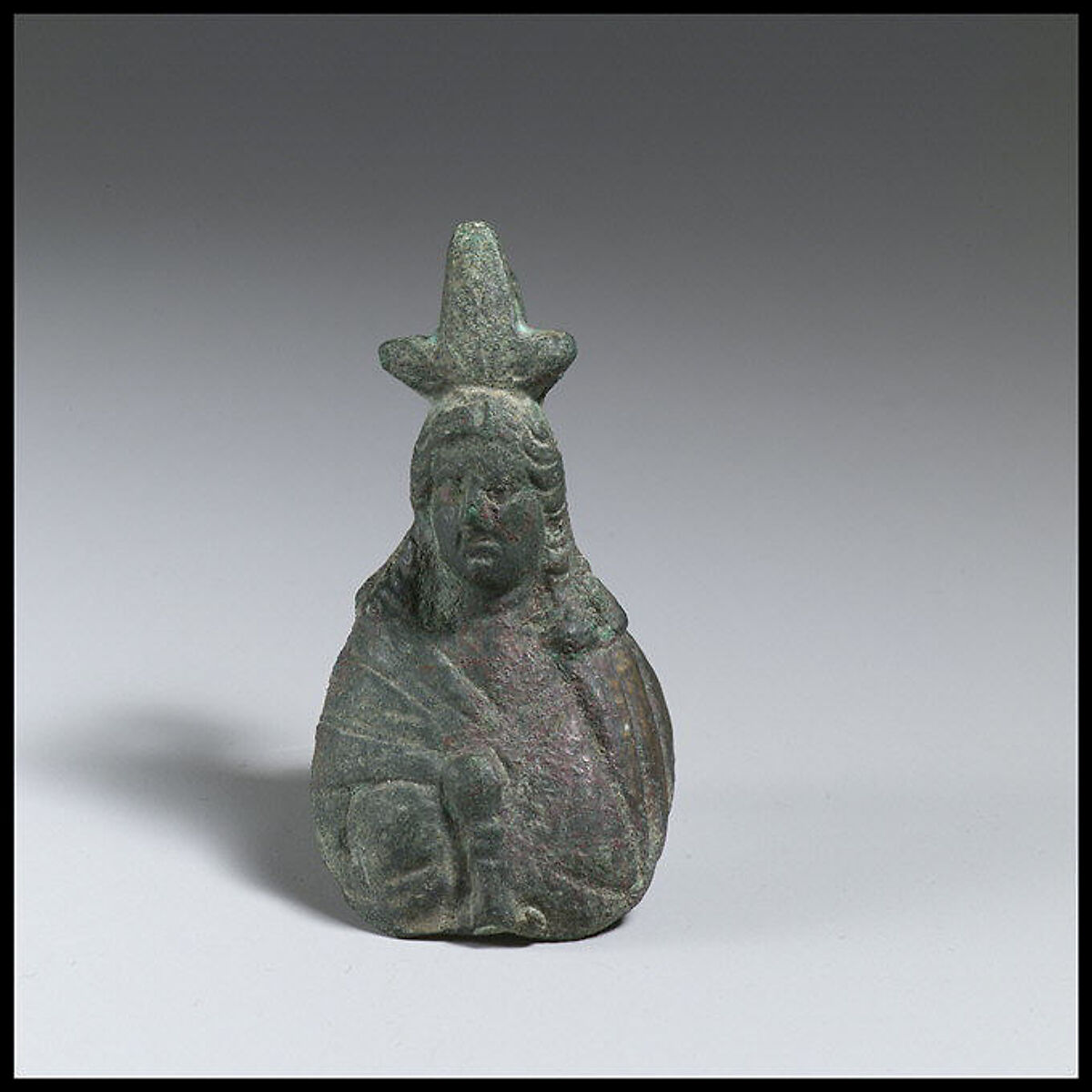
A Roman steelyard weight: commerce in the palm of a hand
This bronze weight, shaped as a bust of Isis, would have hung from a steelyard used for weighing. The Metropolitan Museum of Art dates it to approximately the second–third century CE (c. 100–300 CE), later than an early Pauline date and later than many proposed dates for the letter. Compare its physical scale—7.6 cm high and 55 g—with the chapter’s discussion of gain and wealth. It opens a question about the tools behind transactions, not a claim that 1 Timothy mentions scales or that this object belonged to its recipients.
Explore the historical sourceResearch PathsCurated links for exploring this chapter 3
History & Daily Life1
- Explore slavery and dependency through Roman case studiesUniversity of Bonn · Bonn Center for Dependency and Slavery Studies
Follow the Slaves and Freedpeople section and its inscriptions. This regional project helps expose social and legal dependencies; Roman Bonn is a comparison, not a record of the people addressed by 1 Timothy.
Language & Literature2
- 1 Timothy 6: translation and textual notesNET Bible
Compare the KJV with the translation and notes. Distinguish a manuscript variant from a translation choice and from a historical or interpretive proposal.
- Compare ancient reflection on property and contentmentMIT Internet Classics Archive · Epictetus, Enchiridion
Start with section 1 and compare its distinction between what is and is not under one’s control with the letter’s approach to wealth and hope. Similar ethical concerns do not prove direct borrowing or identical theological assumptions.
Explore the full chapter collection
Directory Members can explore all the available questions, closer-look items, and curated links for this chapter.
Public Discussion
Your display name and comment can be seen by anyone visiting this chapter. Do not include private or sensitive information. Read the Community Guidelines.
You must be logged in to post a comment.