
Habakkuk 3
1 A prayer of Habakkuk the prophet upon Shigionoth.
2 O LORD, I have heard thy speech, and was afraid: O LORD, revive thy work in the midst of the years, in the midst of the years make known; in wrath remember mercy.
3 God came from Teman, and the Holy One from mount Paran. Selah. His glory covered the heavens, and the earth was full of his praise.
4 And his brightness was as the light; he had horns coming out of his hand: and there was the hiding of his power.
5 Before him went the pestilence, and burning coals went forth at his feet.
6 He stood, and measured the earth: he beheld, and drove asunder the nations; and the everlasting mountains were scattered, the perpetual hills did bow: his ways are everlasting.
7 I saw the tents of Cushan in affliction: and the curtains of the land of Midian did tremble.
8 Was the LORD displeased against the rivers? was thine anger against the rivers? was thy wrath against the sea, that thou didst ride upon thine horses and thy chariots of salvation?
9 Thy bow was made quite naked, according to the oaths of the tribes, even thy word. Selah. Thou didst cleave the earth with rivers.
10 The mountains saw thee, and they trembled: the overflowing of the water passed by: the deep uttered his voice, and lifted up his hands on high.
11 The sun and moon stood still in their habitation: at the light of thine arrows they went, and at the shining of thy glittering spear.
12 Thou didst march through the land in indignation, thou didst thresh the heathen in anger.
13 Thou wentest forth for the salvation of thy people, even for salvation with thine anointed; thou woundedst the head out of the house of the wicked, by discovering the foundation unto the neck. Selah.
14 Thou didst strike through with his staves the head of his villages: they came out as a whirlwind to scatter me: their rejoicing was as to devour the poor secretly.
15 Thou didst walk through the sea with thine horses, through the heap of great waters.
16 When I heard, my belly trembled; my lips quivered at the voice: rottenness entered into my bones, and I trembled in myself, that I might rest in the day of trouble: when he cometh up unto the people, he will invade them with his troops.
17 Although the fig tree shall not blossom, neither shall fruit be in the vines; the labour of the olive shall fail, and the fields shall yield no meat; the flock shall be cut off from the fold, and there shall be no herd in the stalls:
18 Yet I will rejoice in the LORD, I will joy in the God of my salvation.
19 The LORD God is my strength, and he will make my feet like hinds' feet, and he will make me to walk upon mine high places. To the chief singer on my stringed instruments.
World Behind This Chapter
Explore the people, places, language, history, and material world connected to Habakkuk 3.
Why does Habakkuk 3 look like a psalm?
The chapter has a prayer heading, the musical term Shigionoth, three Selah markers, and a closing direction for the choirmaster and stringed instruments. Those features frame it as a liturgical poem even though its exact setting of performance is unknown.
Where were Teman and Mount Paran?
Teman is associated with Edom and the southern Transjordan, while Paran belongs to traditions about the southern wilderness. The names establish a southern direction for the divine appearance, but Mount Paran cannot be pinned securely to one modern summit.
Was Habakkuk 3 originally part of the book?
The chapter differs sharply from the dialogue and woes of chapters 1–2, and the Qumran Habakkuk Commentary stops at 2:20. Some scholars treat chapter 3 as a later liturgical addition; others emphasize thematic and verbal links across the present book. The surviving sources do not settle the question.
Sources to ExploreCurated research paths for this chapter 3
Language & Literature2
- Habakkuk 3 in Hebrew and EnglishMechon Mamre
Presents the Hebrew prayer beside an English translation. Useful for studying its musical heading, references to Teman and Paran, storm-theophany language, personified plague, trembling mountains, cosmic warfare, agricultural collapse, and the prophet’s closing declaration of trust.
- Habakkuk 3: Texts in ConversationIntertextual Bible
Collects connections involving Sinai traditions, divine radiance, plague, earthquakes, rivers, the sea, sun and moon, bows and arrows, the defeat of hostile powers, trembling, failed crops, musical performance, and rejoicing despite economic disaster.
Artifacts & Manuscripts1
- Stele of Baal with a ThunderboltSmarthistory
Illustrated study of a Late Bronze Age Levantine stele showing the storm god Baal holding weapons associated with thunder and lightning. The image does not depict the God of Habakkuk, but it provides comparative visual context for storm, lightning, mountain, and divine-warrior imagery in the poem.
WORTH A CLOSER LOOK
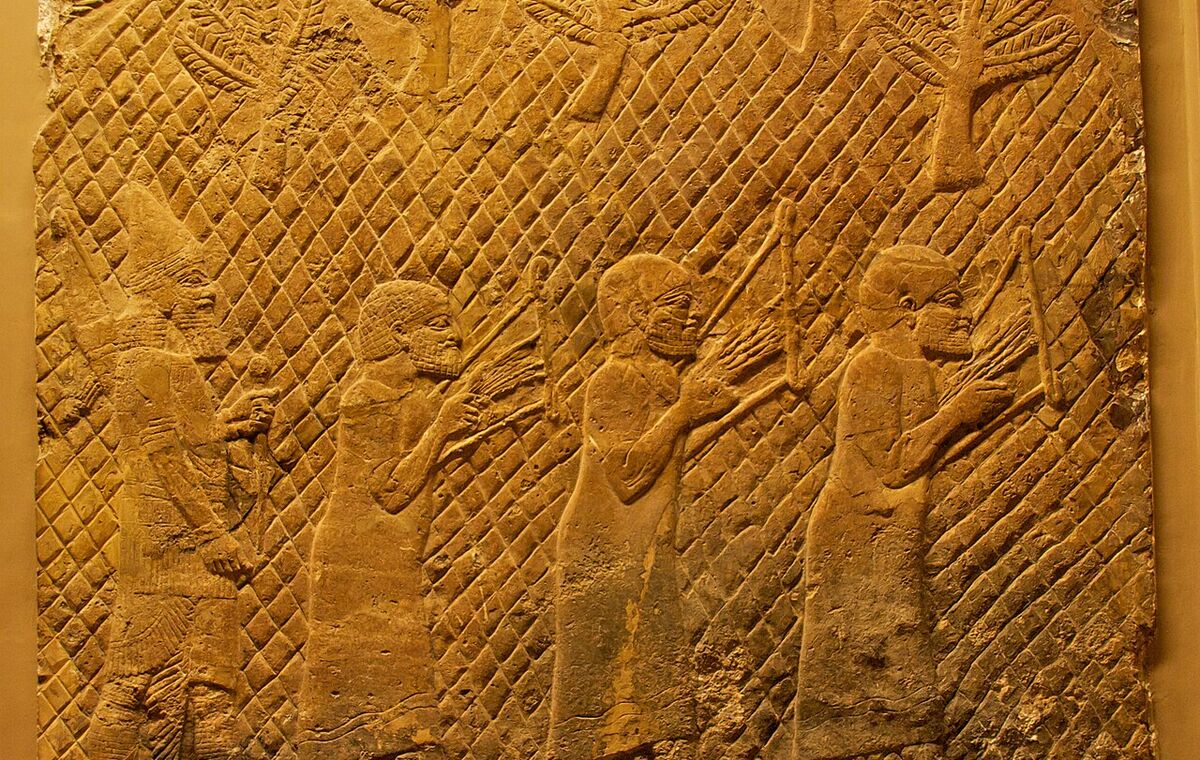
See the musical directions built into Habakkuk 3
Habakkuk 3 identifies itself as a prayer “upon Shigionoth,” places Selah after three poetic movements, and closes with directions for the chief musician and stringed instruments. The precise musical meanings remain uncertain, but these visible signals allow any reader to recognize that the chapter is framed for performance.
Public Discussion
Your display name and comment can be seen by anyone visiting this chapter. Do not include private or sensitive information. Read the Community Guidelines.
You must be logged in to post a comment.