
John 21
1 After these things Jesus shewed himself again to the disciples at the sea of Tiberias; and on this wise shewed he himself.
2 There were together Simon Peter, and Thomas called Didymus, and Nathanael of Cana in Galilee, and the sons of Zebedee, and two other of his disciples.
3 Simon Peter saith unto them, I go a fishing. They say unto him, We also go with thee. They went forth, and entered into a ship immediately; and that night they caught nothing.
4 But when the morning was now come, Jesus stood on the shore: but the disciples knew not that it was Jesus.
5 Then Jesus saith unto them, Children, have ye any meat? They answered him, No.
6 And he said unto them, Cast the net on the right side of the ship, and ye shall find. They cast therefore, and now they were not able to draw it for the multitude of fishes.
7 Therefore that disciple whom Jesus loved saith unto Peter, It is the Lord. Now when Simon Peter heard that it was the Lord, he girt his fisher's coat unto him, for he was naked, and did cast himself into the sea.
8 And the other disciples came in a little ship; for they were not far from land, but as it were two hundred cubits, dragging the net with fishes.
9 As soon then as they were come to land, they saw a fire of coals there, and fish laid thereon, and bread.
10 Jesus saith unto them, Bring of the fish which ye have now caught.
11 Simon Peter went up, and drew the net to land full of great fishes, an hundred and fifty and three: and for all there were so many, yet was not the net broken.
12 Jesus saith unto them, Come and dine. And none of the disciples durst ask him, Who art thou? knowing that it was the Lord.
13 Jesus then cometh, and taketh bread, and giveth them, and fish likewise.
14 This is now the third time that Jesus shewed himself to his disciples, after that he was risen from the dead.
15 So when they had dined, Jesus saith to Simon Peter, Simon, son of Jonas, lovest thou me more than these? He saith unto him, Yea, Lord; thou knowest that I love thee. He saith unto him, Feed my lambs.
16 He saith to him again the second time, Simon, son of Jonas, lovest thou me? He saith unto him, Yea, Lord; thou knowest that I love thee. He saith unto him, Feed my sheep.
17 He saith unto him the third time, Simon, son of Jonas, lovest thou me? Peter was grieved because he said unto him the third time, Lovest thou me? And he said unto him, Lord, thou knowest all things; thou knowest that I love thee. Jesus saith unto him, Feed my sheep.
18 Verily, verily, I say unto thee, When thou wast young, thou girdedst thyself, and walkedst whither thou wouldest: but when thou shalt be old, thou shalt stretch forth thy hands, and another shall gird thee, and carry thee whither thou wouldest not.
19 This spake he, signifying by what death he should glorify God. And when he had spoken this, he saith unto him, Follow me.
20 Then Peter, turning about, seeth the disciple whom Jesus loved following; which also leaned on his breast at supper, and said, Lord, which is he that betrayeth thee?
21 Peter seeing him saith to Jesus, Lord, and what shall this man do?
22 Jesus saith unto him, If I will that he tarry till I come, what is that to thee? follow thou me.
23 Then went this saying abroad among the brethren, that that disciple should not die: yet Jesus said not unto him, He shall not die; but, If I will that he tarry till I come, what is that to thee?
24 This is the disciple which testifieth of these things, and wrote these things: and we know that his testimony is true.
25 And there are also many other things which Jesus did, the which, if they should be written every one, I suppose that even the world itself could not contain the books that should be written. Amen.
World Behind This Chapter
Explore the people, places, language, history, and material world connected to John 21.
How does this fishing scene compare with Luke 5?
John 21:1–14 names seven disciples, describes fishing through the night, a direction from shore and a large catch. Compare Luke 5:1–11 while preserving the different narrative timing, participants, instructions and condition of the nets. Shared features make the accounts worth comparing; they do not require that every detail comes from one combined event.
Does the number 153 have one established symbolic explanation?
John 21:11 gives a precise catch of 153 large fish. Numerous symbolic calculations have been proposed, but the narrative does not explain the number. Begin with its role in the reported catch and the unbroken net. A numerical pattern that can be constructed by a reader is not by itself a demonstration of an author’s intended symbolism.
Why is a charcoal fire a useful detail to notice?
John 21:9 describes a charcoal fire on shore; John 18:18 uses the same distinctive kind of fire in Peter’s earlier setting. Compare the people, actions and dialogue around each fire. The repetition is a concrete literary observation. Claims about how every object in the breakfast scene symbolizes the earlier denial require separate argument.
WORTH A CLOSER LOOK
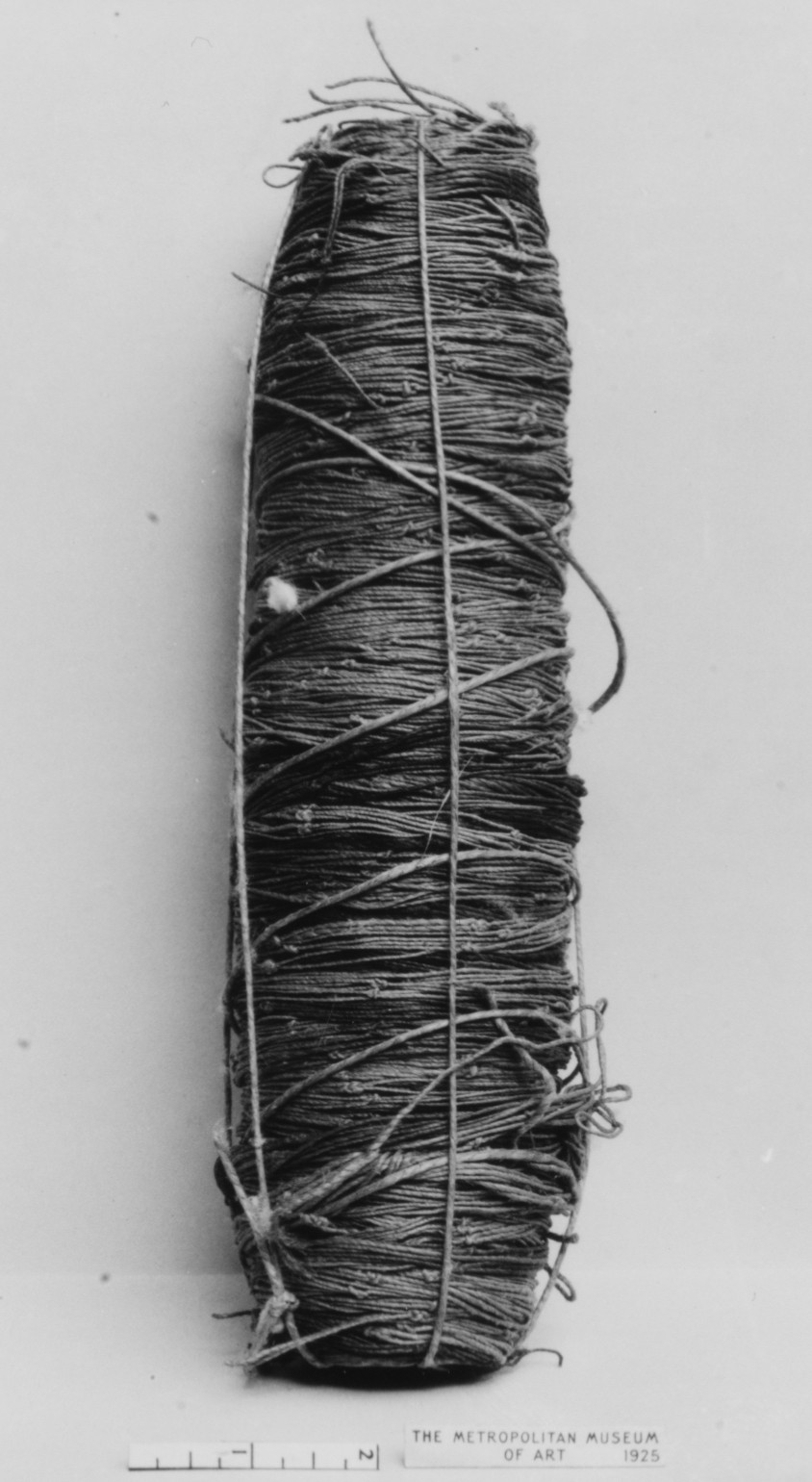
A surviving linen fishing net from Roman-period Egypt
Linen-cord fish net · Egypt, Deir el-Bahri · Metropolitan Museum of Art, 25.3.225. The museum tentatively dates it to the first century CE. Its surviving cords offer a material comparison for the fishing work in John 21. This rolled net is from Egypt, not Galilee, and cannot identify the construction, dimensions or exact type of net used in the narrated catch.
Explore the historical sourceResearch PathsCurated links for exploring this chapter 3
Maps & Timeline1
- Explore the lake and shore setting in the John 21 previewBiblePlaces · John 21
Use the openly accessible photographs and captions for geographical context. Traditional associations with particular shore locations are distinct from a location identified by the narrative. The full commercial collection is separate.
Language & Literature2
- Investigate one of the verbs translated loveUniversity of Chicago · Logeion
Compare the entries and cited uses of phileō with agapaō and their occurrences in John. A lexical entry gives possible uses; it does not establish a rigid hierarchy of love in John 21.
- John 21: the catch, love language and the closing testimonyNET Bible
Compare translation notes on the fishing scene and Peter’s exchange. Proposed symbolism for the fish, identifications of the beloved disciple and accounts of the Gospel’s editing should be treated as arguments to examine.
Explore the full chapter collection
Directory Members can explore all the available questions, closer-look items, and curated links for this chapter.
Public Discussion
Your display name and comment can be seen by anyone visiting this chapter. Do not include private or sensitive information. Read the Community Guidelines.
You must be logged in to post a comment.