
The Bible Directory · Questions Worth Exploring
Does the Cyrus Cylinder Mention the Jews?
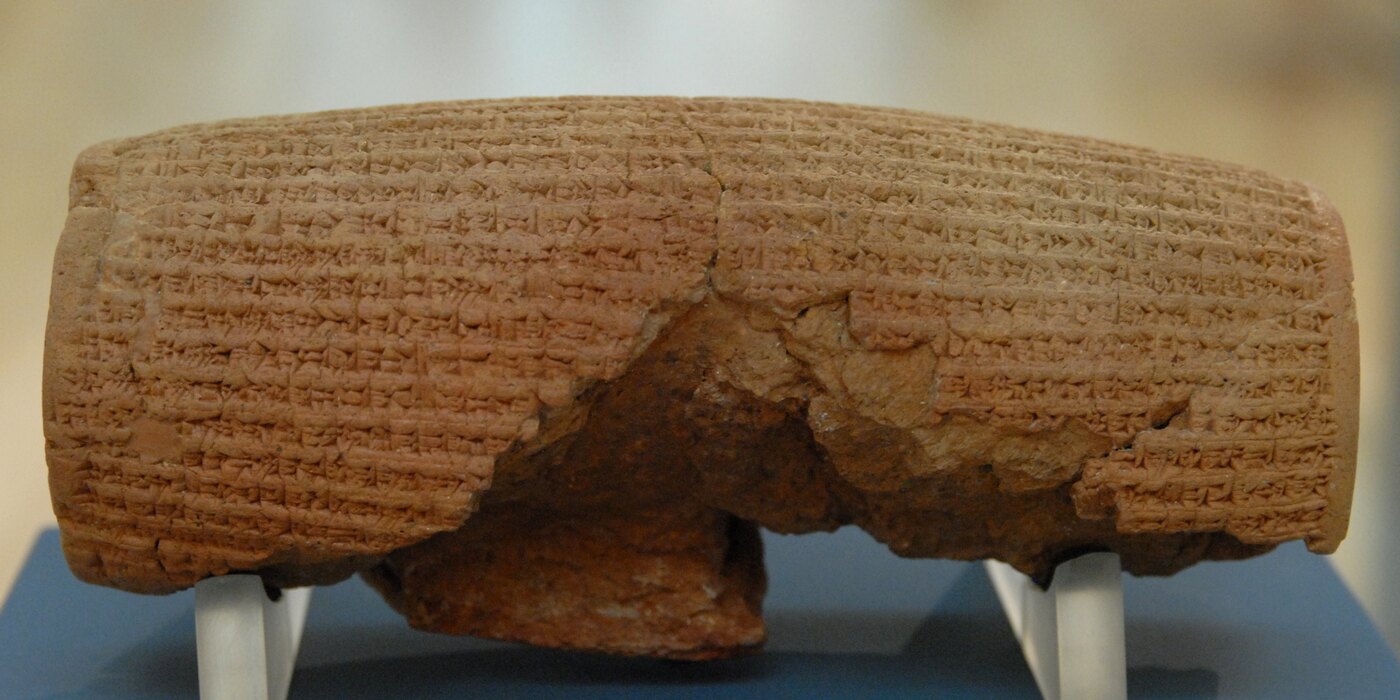

A famous connection is strongest when we describe exactly what the inscription says.
What we know
The Cyrus Cylinder belongs to the setting of Cyrus’s conquest of Babylon in 539 BCE. It describes restoration involving sanctuaries and displaced communities. It does not name the Jews. The Museum of Fine Arts, Houston, explains both that absence and the historical connection often made with Judean return. [1]
Where scholars disagree
How closely should the cylinder’s claims be connected with the decrees narrated in Ezra? The inscription and Ezra have different subjects and purposes. Similar policies create a meaningful historical comparison; they do not turn the cylinder into a surviving copy of Ezra’s decree.
What remains uncertain
The cylinder alone cannot establish the number, timing, or experiences of Judean returnees. It cannot tell us that all deported communities were treated identically. Read its claims as a royal presentation of rule and compare other records before generalizing.
Worth a closer look
Use the Houston museum’s exhibition account [1] and the Met’s discussion of Judean diaspora records [2]. Compare what each source says about the object itself with what it infers about the wider historical setting. Notice where Jerusalem enters the discussion.
Try it yourself
Read Ezra 1:1–4 and 6:1–5. List the ruler, place, recipients, and actions in each passage. Then check which of those details are actually supplied by the museum’s description of the cylinder. Keep a separate column for connections rather than exact matches.
Read the related chapters
Research Paths
[1] Museum of Fine Arts, Houston — The British Museum’s Cyrus Cylinder
[2] Ira Spar, The Met — Cyrus and the Judean Diaspora
Read the Cyrus Cylinder — British Museum translation hosted by the Asian Art Museum ↗
Scroll to “Cyrus Cylinder Translation.” Compare lines 30–32 with Ezra 1 and 6. List the places and actions the inscription names before proposing connections with Judah.
Biblical passages linked above are primary texts for the reading exercise. Outside resources supply the historical comparisons; they may use different terminology or perspectives.
Keep exploring this question
Follow these paths into the Directory’s existing guides.