
The Neo-Babylonian Empire
Explore the royal city on the Euphrates: its temples, colorful streets and written traditions, then the empire that changed Judah’s world.
MEMBER RESEARCH EDITIONSee the additional member research ↓
Babylon: a city of kings, gods and scribes
Babylon made royal power visible in brilliant glazed-brick gates, ceremonial streets and temples honoring Marduk. Its scribes preserved literature, recorded business and studied the heavens in cuneiform. The city already had a long history when Nabopolassar founded the Neo-Babylonian kingdom in 626 BCE; under Nebuchadnezzar II it became the monumental center of an empire reaching into the Levant.
Jerusalem’s captures and the destruction of its temple made Babylon a decisive presence in biblical memories of exile. Cyrus conquered the city in 539 BCE, ending the independent dynasty, while its communities and scribal learning continued under later rulers. Surviving chronicles, contracts and scientific tablets now recover a world far larger than the biblical image of an enemy empire.
Timeline: empire, exile and what followed
- An independent Babylonian kingship
Nabopolassar establishes the kingdom that becomes the Neo-Babylonian Empire.
- Nineveh falls
Babylonian and Median forces capture the Assyrian royal city.
- Carchemish and a new king
Nebuchadnezzar defeats Egypt at Carchemish and succeeds Nabopolassar. His first full regnal year begins in 604 BCE.
- Jerusalem’s first capture
Jehoiachin is deported; Zedekiah is installed. The temple remains standing.
- Jerusalem and its temple destroyed
A later rebellion leads to another siege, destruction and further deportation. The precise year depends on chronological reconstruction.
- Nabonidus’s reign
The last independent king; his son Belshazzar appears in royal records.
- Persian conquest
Cyrus takes Babylonia. The city continues under Persian rule.
- Judean communities continue
Documents trace families in Babylonia across the change of empire.
- Beyond the empire
Alexander dies at Babylon. The city and cuneiform learning continue into later periods.
Kings of the Neo-Babylonian period
Dates begin with accession where known. Babylonian documents also count full regnal years beginning the following spring. Belshazzar was Nabonidus’s son and crown prince, not a separate entry in this sequence.
Royal inscription editions and chronology ↗
- Nabopolassar626–605 BCE
- Nebuchadnezzar II605–562 BCE; first full regnal year 604
- Amel-Marduk562–560 BCE
- Neriglissar560–556 BCE
- Labashi-Marduk556 BCE; brief reign
- Nabonidus556–539 BCE
Locate the city and the route west
Find Babylon on the Euphrates, then follow the corridor toward Judah and the Mediterranean. This is a geographic orientation, not a fixed border for every reign.
Babylon and the routes west
A focused map of Babylonia and the corridor toward the Levant. Political control changed between Nabopolassar, Nebuchadnezzar II, and the Persian conquest.
Map: The Bible Directory · Geographic orientation mapLook closely at the surviving records
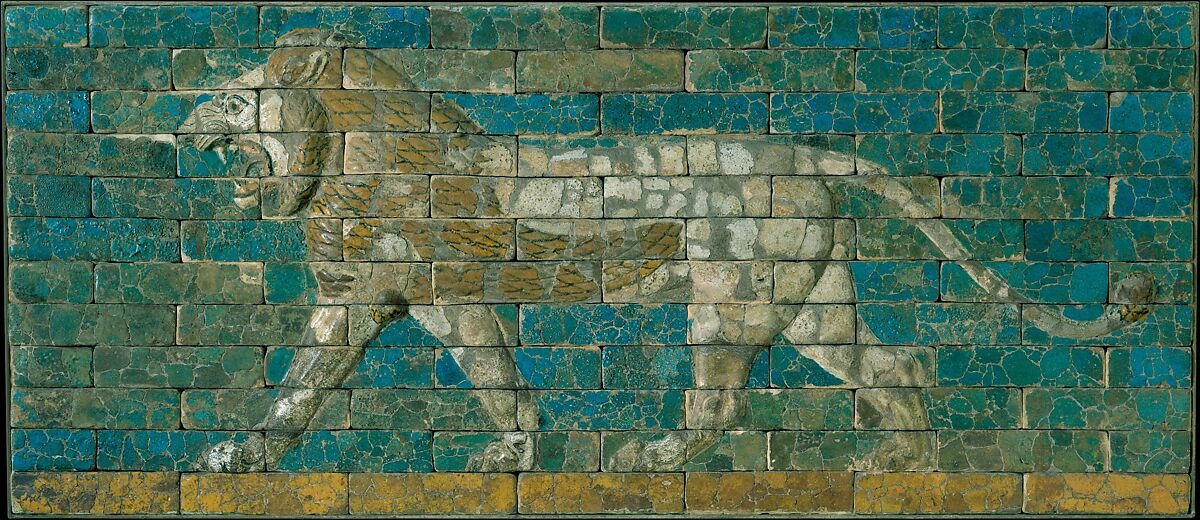
A city in brilliant color: the Processional Way lion
c. 604–562 BCE · Babylon · The Met 31.13.1
This lion once decorated Babylon’s Processional Way. Lions associated with Ishtar lined a route used for religious processions. Glazed bricks made the street a setting of brilliant color, rather than the bare earthen city a modern reader might imagine.
What to notice: Look at how individual bricks form a continuous animal. The panel is surviving architectural decoration, not a modern illustration of an ancient lion.
The Metropolitan Museum of Art, Fletcher Fund, 1931. Public-domain Open Access image. Proportionally resized; no crop. Image source · Public domain / Open Access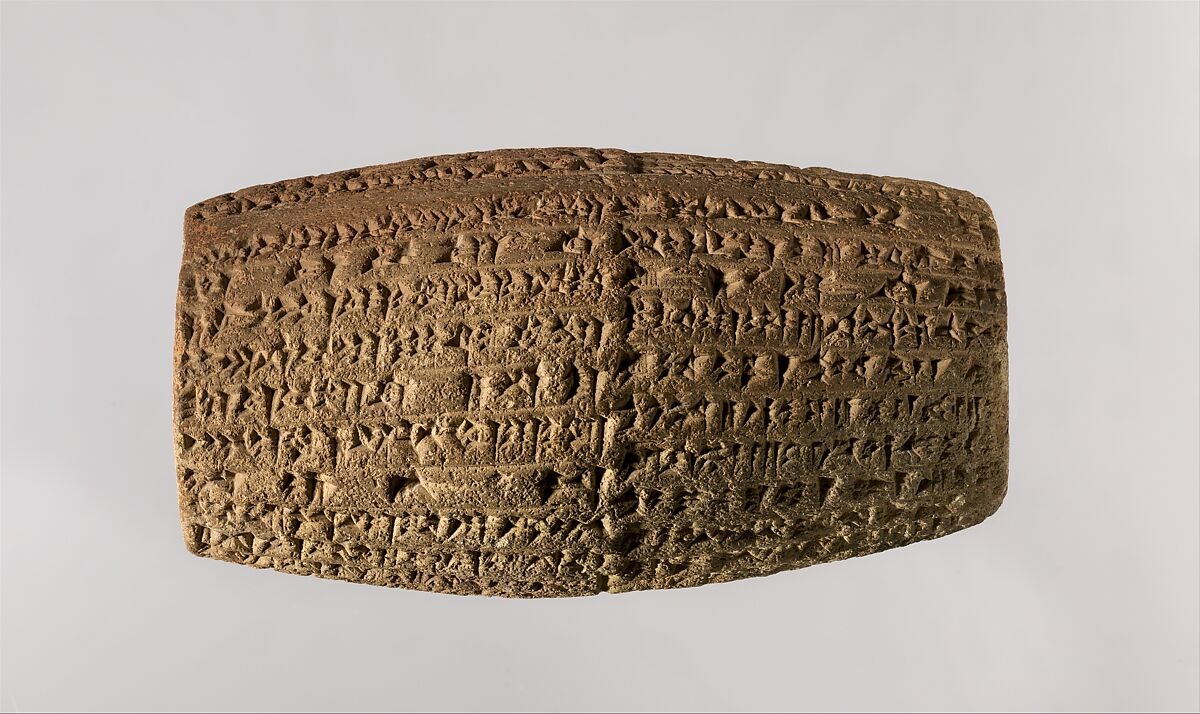
Nebuchadnezzar writes his name into the city
c. 604–562 BCE · attributed to Babylon (?) · The Met 86.11.60
Nebuchadnezzar II’s inscription describes construction of Babylon’s outer city wall. Cylinders like this were placed in building foundations, addressing the gods and future rulers rather than ordinary passersby. The king’s building program survives in both architecture and the words he chose to preserve.
What to notice: The barrel shape is covered with closely packed wedges. This is a foundation inscription, not a cylinder seal rolled across clay.
The Metropolitan Museum of Art, Purchase, 1886. Public-domain Open Access image. Proportionally resized; no crop. Image source · Public domain / Open Access