
The Achaemenid Persian World
Explore an empire of royal palaces and connected provinces, then follow its records into Jerusalem’s restoration and Jewish life beyond Judah.
MEMBER RESEARCH EDITIONSee the additional member research ↓
Persia: royal cities and a connected imperial world
Persian kings built an empire linking the Iranian heartland with Mesopotamia, Anatolia, the Levant and Egypt. From Cyrus’s conquests in the sixth century BCE, roads, governors and multilingual records connected distant regions under royal authority. Persepolis displayed that power in monumental halls and reliefs representing the empire’s peoples.
Persian rule created the imperial setting for Jerusalem’s restoration and the province of Yehud, while Jewish communities continued in Babylonia and Egypt. Alexander’s campaigns ended the Achaemenid dynasty in 330 BCE; populations and governing traditions continued under new rulers. Today, inscriptions and administrative archives reveal the empire’s workings, and the multilingual monument at Behistun holds a central place in the history of deciphering cuneiform.
Timeline: expansion, provincial life and conquest
- Cyrus defeats the Median king
The conventional date for a decisive step in Persian imperial expansion.
- Babylon is conquered
Cyrus incorporates Babylonia and its western territories.
- Cambyses conquers Egypt
Egypt becomes part of the empire.
- Darius I takes power
A contested succession and rebellions precede the account carved at Behistun.
- Jerusalem’s temple is rebuilt
Haggai’s appeals date to 520; Ezra 6 places completion in Darius’s sixth year.
- Xerxes I rules
The king commonly identified with Ahasuerus, the ruler named in Esther.
- Artaxerxes I rules
Nehemiah’s mission is commonly placed in this reign; Ezra’s chronology remains debated.
- A Jewish community petitions from Egypt
The Elephantine letter requests permission to rebuild its local temple.
- Macedonian conquest ends dynastic rule
Alexander defeats Darius III at Gaugamela; the royal centers fall and Darius dies.
- Successor kingdoms emerge
Alexander’s death begins a new struggle for power; imperial institutions and local communities continue to change.
Persian kings and their dates
Conventional reign dates provide orientation. A slash marks an alternative year; accession crises can produce short overlapping or rival reigns.
- Cyrus II559–530 BCE; imperial expansion conventionally from c. 550
- Cambyses II530–522 BCE
- Bardiya / the contested claimant522 BCE; identity disputed in accounts of the succession
- Darius I522–486 BCE
- Xerxes I486–465 BCE
- Artaxerxes I465–424 BCE
- Darius II423–404 BCE; brief rival reigns preceded his accession
- Artaxerxes II404–359/358 BCE
- Artaxerxes III359/358–338 BCE
- Arses / Artaxerxes IV338–336 BCE
- Darius III336–330 BCE
Locate the heartland and the route west
Find Susa and the Persian heartland, then look toward the Levant and the Aegean. This geographic view does not show every province or the empire’s full extent.
Persia, Susa, and the eastern Mediterranean
A focused orientation map locating the Persian heartland and the westward corridor. It does not attempt to label every satrapy.
Map: The Bible Directory · Custom geographic orientation mapLook closely at the surviving records
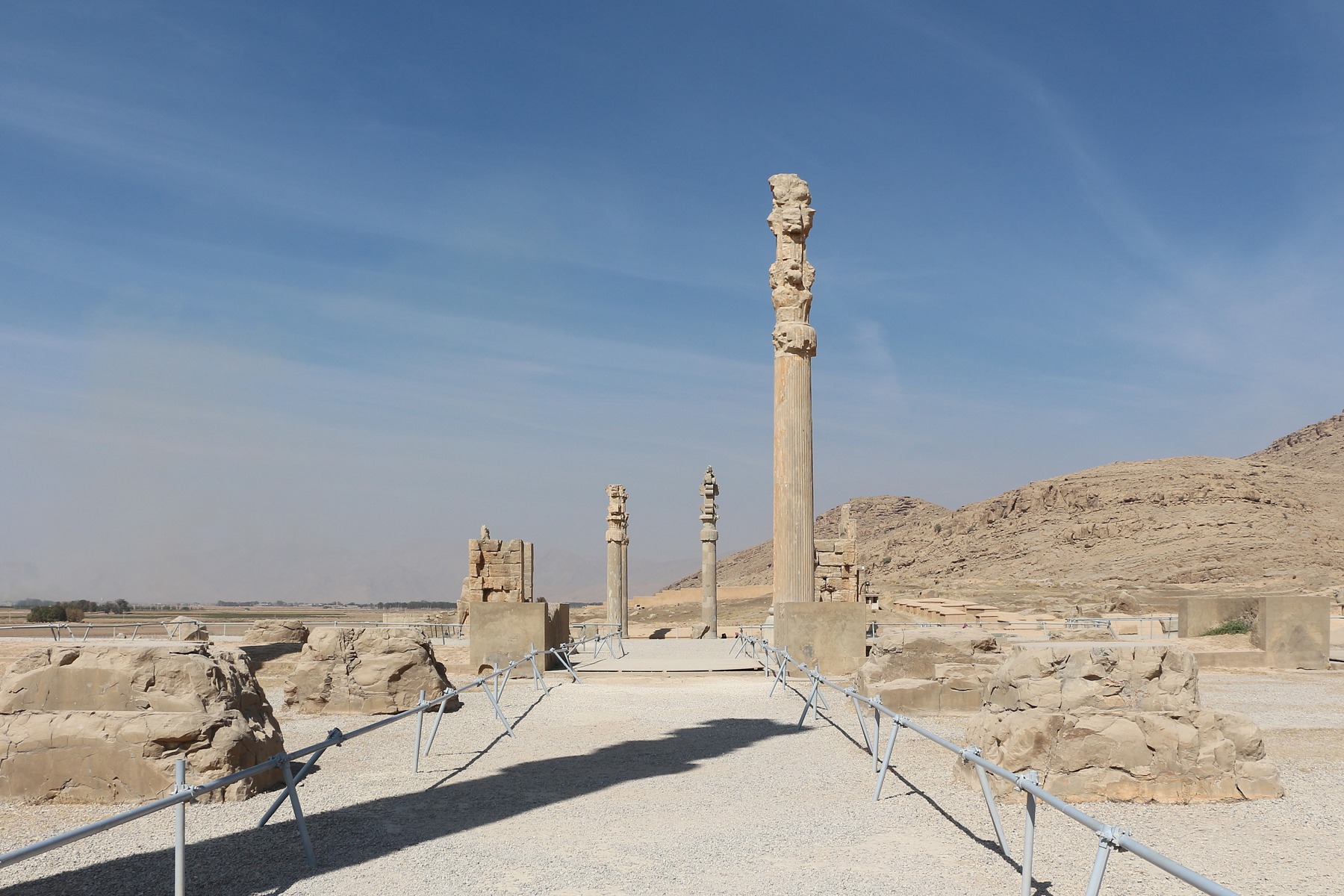
Persepolis: the scale of a royal audience hall
Achaemenid royal terrace · built from the reign of Darius I onward · Persepolis, Iran
The Apadana was a great columned audience hall. Its surviving columns reveal the scale of the court’s architecture; sculpted stairways elsewhere in the complex present delegations from the empire’s peoples.
What to notice: Compare the tall surviving columns with the low foundations. This is a modern photograph of archaeological remains, not a reconstruction of the complete hall.
Photograph: Bernard Gagnon, 2016. CC BY-SA 4.0. Proportionally resized; no crop. Image source · CC BY-SA 4.0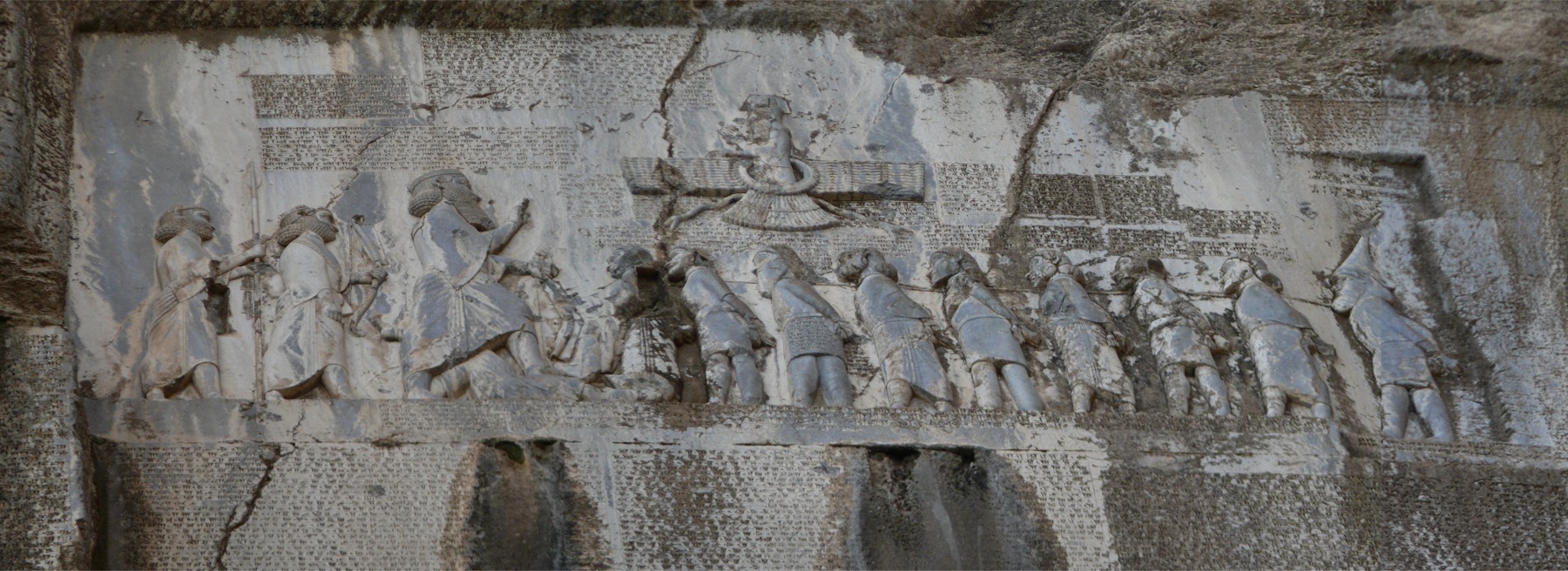
Behistun: Darius presents a victory in stone
Reign of Darius I · late sixth century BCE · Bisotun (Behistun), Iran
Darius’s relief and inscription announce his authority after a contested accession and rebellions. The text was composed in Old Persian, Elamite and Babylonian Akkadian, giving modern scholars a vital comparison for deciphering cuneiform.
What to notice: Darius stands at the left of the captives. The winged figure above forms part of the monument’s religious imagery; not all surrounding inscriptions are included in this photograph.
Photograph: PatrickC / dynamomosquito, 2009. CC BY-SA 2.0. Proportionally resized; no crop. Image source · CC BY-SA 2.0