
The Bible Directory · Questions Worth Exploring
What Were Seals Used For in the Ancient World?
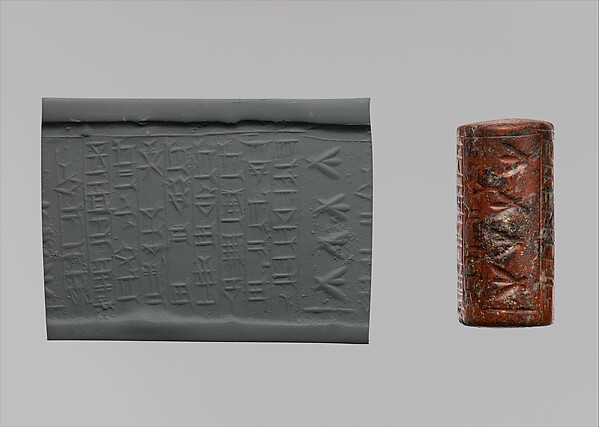
A small engraved object could leave a recognizable mark on a much larger transaction.
What we know
Ancient seals marked ownership or identity and secured containers and documents. A cylinder seal rolled a continuous design into clay; a stamp seal pressed a design onto a surface. The Met’s Kassite example shows how inscriptions and imagery could share the same tiny object. Seals could also carry protective associations. [1]
Where scholars disagree
An image’s meaning depends on date, region, and context. Identifying an owner with a person named in the Bible needs more than a matching name. Ask about the inscription, archaeological provenance, dating, and the frequency of the name before accepting an identification.
What remains uncertain
A detached seal may have lost the original document or container it marked. Its surviving design need not reveal the full transaction or the owner’s personal beliefs. An attractive impression is a starting point for questions, not a complete biography.
Worth a closer look
Open the Met’s cylinder seal record, object 1985.357.25, and compare the stone with its modern impression. The modern clay impression makes the design visible; it is not an ancient document found alongside the seal. [1]
Try it yourself
Read Jeremiah 32:9–14. List the roles of money, writing, witnesses, sealing, and storage. Compare those functions with the Met’s much earlier witnessed transaction tablet [2], keeping their different dates and locations in view.
Read the related chapters
Research Paths
[1] The Met — Kassite cylinder seal, 1985.357.25
[2] The Met — Statement before witnesses, 66.245.20a
Penn Museum — Stamp seal B14287 from Nippur ↗
A stamp-seal comparison for the cylinder seal above. Compare the shape, recorded find location and catalogue description rather than assuming that every seal served one identical purpose.
Biblical passages linked above are primary texts for the reading exercise. Outside resources supply the historical comparisons; they may use different terminology or perspectives.
Keep exploring this question
Follow these paths into the Directory’s existing guides.