
Amos 8
1 Thus hath the Lord GOD shewed unto me: and behold a basket of summer fruit.
2 And he said, Amos, what seest thou? And I said, A basket of summer fruit. Then said the LORD unto me, The end is come upon my people of Israel; I will not again pass by them any more.
3 And the songs of the temple shall be howlings in that day, saith the Lord GOD: there shall be many dead bodies in every place; they shall cast them forth with silence.
4 Hear this, O ye that swallow up the needy, even to make the poor of the land to fail,
5 Saying, When will the new moon be gone, that we may sell corn? and the sabbath, that we may set forth wheat, making the ephah small, and the shekel great, and falsifying the balances by deceit?
6 That we may buy the poor for silver, and the needy for a pair of shoes; yea, and sell the refuse of the wheat?
7 The LORD hath sworn by the excellency of Jacob, Surely I will never forget any of their works.
8 Shall not the land tremble for this, and every one mourn that dwelleth therein? and it shall rise up wholly as a flood; and it shall be cast out and drowned, as by the flood of Egypt.
9 And it shall come to pass in that day, saith the Lord GOD, that I will cause the sun to go down at noon, and I will darken the earth in the clear day:
10 And I will turn your feasts into mourning, and all your songs into lamentation; and I will bring up sackcloth upon all loins, and baldness upon every head; and I will make it as the mourning of an only son, and the end thereof as a bitter day.
11 Behold, the days come, saith the Lord GOD, that I will send a famine in the land, not a famine of bread, nor a thirst for water, but of hearing the words of the LORD:
12 And they shall wander from sea to sea, and from the north even to the east, they shall run to and fro to seek the word of the LORD, and shall not find it.
13 In that day shall the fair virgins and young men faint for thirst.
14 They that swear by the sin of Samaria, and say, Thy god, O Dan, liveth; and, The manner of Beer-sheba liveth; even they shall fall, and never rise up again.
World Behind This Chapter
Explore the people, places, language, history, and material world connected to Amos 8.
What is the Hebrew wordplay between summer fruit and “the end”?
The Hebrew qayiṣ (“summer fruit”) and qēṣ (“end”) sound alike. The vision depends on hearing that sound relationship, which largely disappears in English.
How did dishonest weights work in an ancient market?
Goods could be weighed against standard stones or metal weights. Amos’s complaint about making the ephah small and the shekel great belongs to ordinary market practice, where manipulation could disadvantage buyers.
What is the “famine of hearing the words of the LORD”?
The chapter turns ordinary famine language into a metaphor for unavailable revelation. Tracking that shift helps distinguish the image from the agricultural shortages elsewhere in Amos.
WORTH A CLOSER LOOK
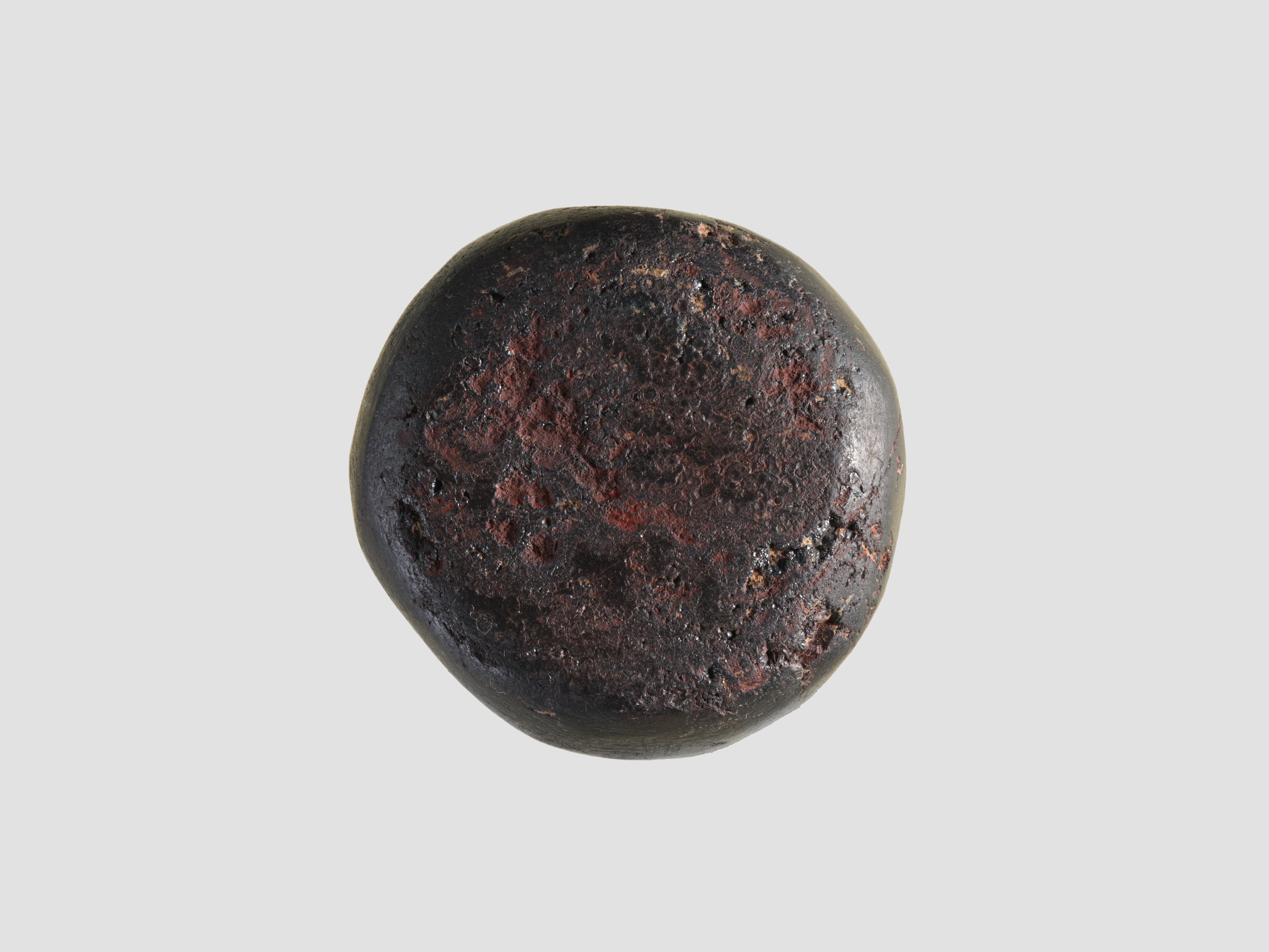
Hold an Iron Age weight beside Amos’s market language
An eighth–seventh-century BCE hematite weight from Edom makes standardized weighing physically visible beside Amos’s criticism of manipulated measures. It is regional comparative material, not an object from an Israelite marketplace.
View the objectResearch PathsCurated links for exploring this chapter 3
Language & Literature2
- Amos 8: Texts in ConversationIntertextual Bible
Collects connections involving summer fruit, the approaching end, dishonest trade, reduced measures, inflated weights, exploitation of the poor, mourning, earthquake imagery, darkness at noon, famine for divine words, and wandering in search of revelation.
- Amos’s Northern-Israelite Puns: Summer Fruit and the EndTheTorah.com
Explains the wordplay between qayits, “summer fruit,” and qets, “end,” in Amos’s fourth vision. It argues that the two words may have sounded especially similar in the northern Israelite dialect and examines additional puns that sharpen the prophet’s judgment language.
Artifacts & Manuscripts1
- Ancient Near Eastern Shekel WeightBritish Museum
Visible inscribed stone weight associated with the ancient shekel system. The object illustrates the standardized measures merchants were expected to use and provides material context for Amos’s accusation that traders enlarged the shekel, reduced the ephah, and manipulated balances for profit.
Public Discussion
Your display name and comment can be seen by anyone visiting this chapter. Do not include private or sensitive information. Read the Community Guidelines.
You must be logged in to post a comment.