

The Bible Directory · Ancient Religious Worlds
Ishtar: Love, War and Divine Power
Meet Ishtar
Ishtar joined the force of desire to the force of battle. Hymns, prayers and royal imagery portray a goddess whose favor mattered to lovers, rulers and cities—a formidable presence in Mesopotamian religious life, with Venus as her celestial manifestation.
Who was Ishtar?
Ishtar (Ištar) is the Akkadian name of a major Mesopotamian goddess associated with love and war. She was identified with the Sumerian goddess Inanna (also written Inana), though their portrayals varied across time and place.
What was she known for?
Love and sexual attraction, warfare and royal power were important associations. Venus, visible as the morning or evening star, was her celestial manifestation.
Why was she worshiped?
People sought favor and help from a powerful deity. The Exaltation of Inana gives one literary example: a distressed speaker appeals to her for support.
How did people relate to her?
The Exaltation combines awe at destructive power with a plea for help and an ending of reconciliation. Fear and trust could appear in the same work; individual feelings are harder to recover.
What did worship involve?
Through temple offerings, prayers, songs and dedicatory objects. A surviving lament tablet and a worshiper statue from Inanna’s Nippur temple show different parts of that religious world.
What survives from the ancient world?
Named literary works, excavated temple objects and images interpreted through their attributes. Compare a text naming the goddess with a museum identification based on weapons, animals and setting.
Explore the sources
Explore the objects, writings and questions below.
Begin with names, places and time
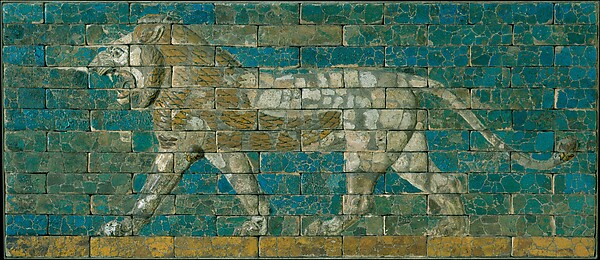
Yağmur Heffron’s scholarly overview introduces Inanna/Ishtar’s roles and changing traditions. Uruk was an important center. Keep a Sumerian poem, an Old Babylonian seal and a Neo-Babylonian street decoration in their own settings. They are not one moment in history.
Documents to investigate
Inana’s Descent: Read the Oxford ETCSL English translation. The opening lists sanctuaries and divine powers; the narrative then follows her journey into the underworld. Notice the repeated gates and the role of her attendant. This is a literary composition, not a transcript of a worship service.
The Exaltation of Inana: Read the Oxford ETCSL English translation. Compare the threatening imagery near the beginning with the speaker’s appeal for help and the changed relationship at the end. The speaker names herself Enheduanna. Distinguish that literary voice from questions about composition and surviving copies.
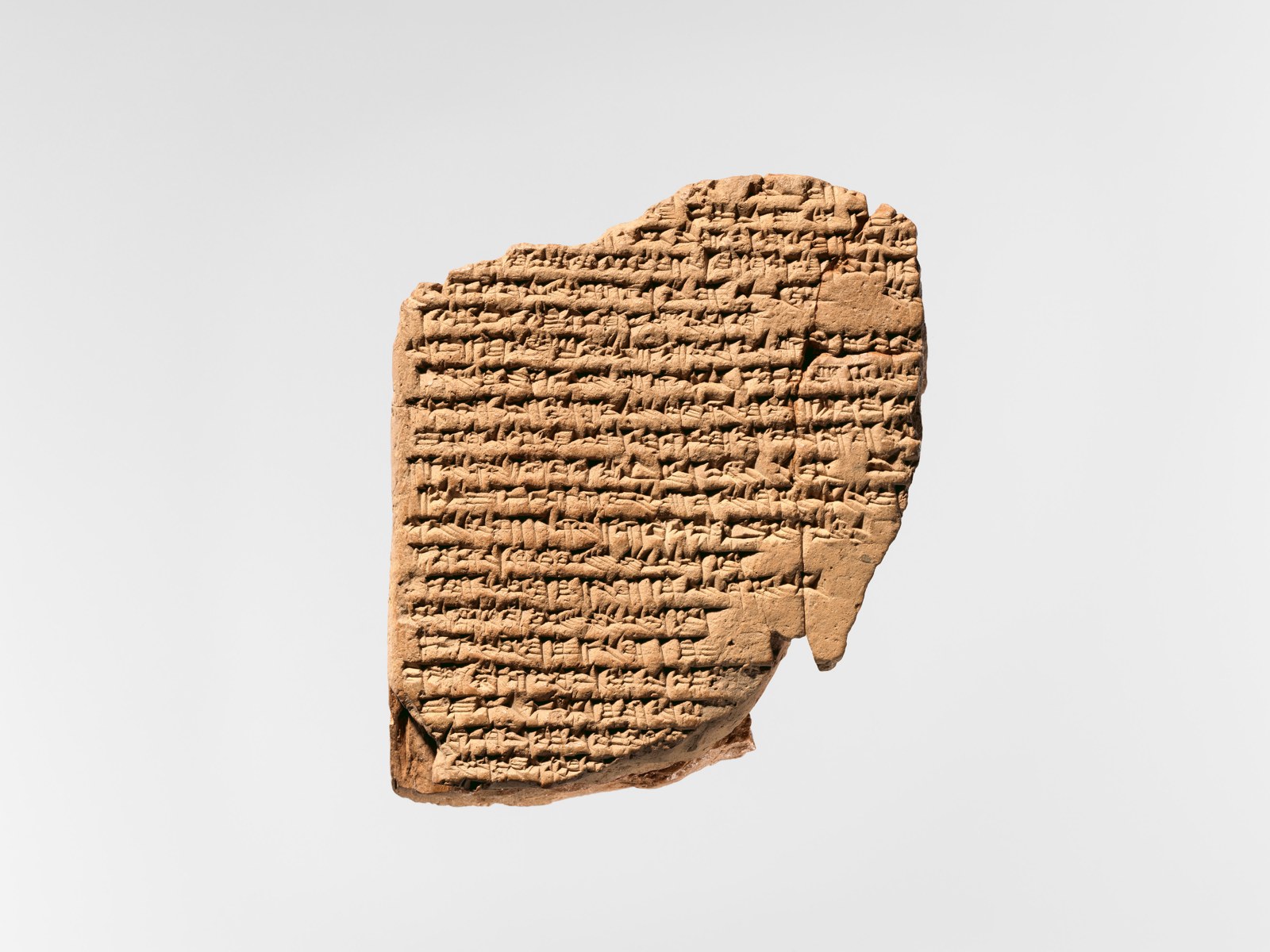
A surviving lament tablet: The Met’s 86.11.286a preserves part of a song in Sumerian with Akkadian translation. Dated around the second–first century BCE, it concerns the goddess’s damaged cities and shrines. It is a different work from the two Oxford translations linked above.
Worth a closer look
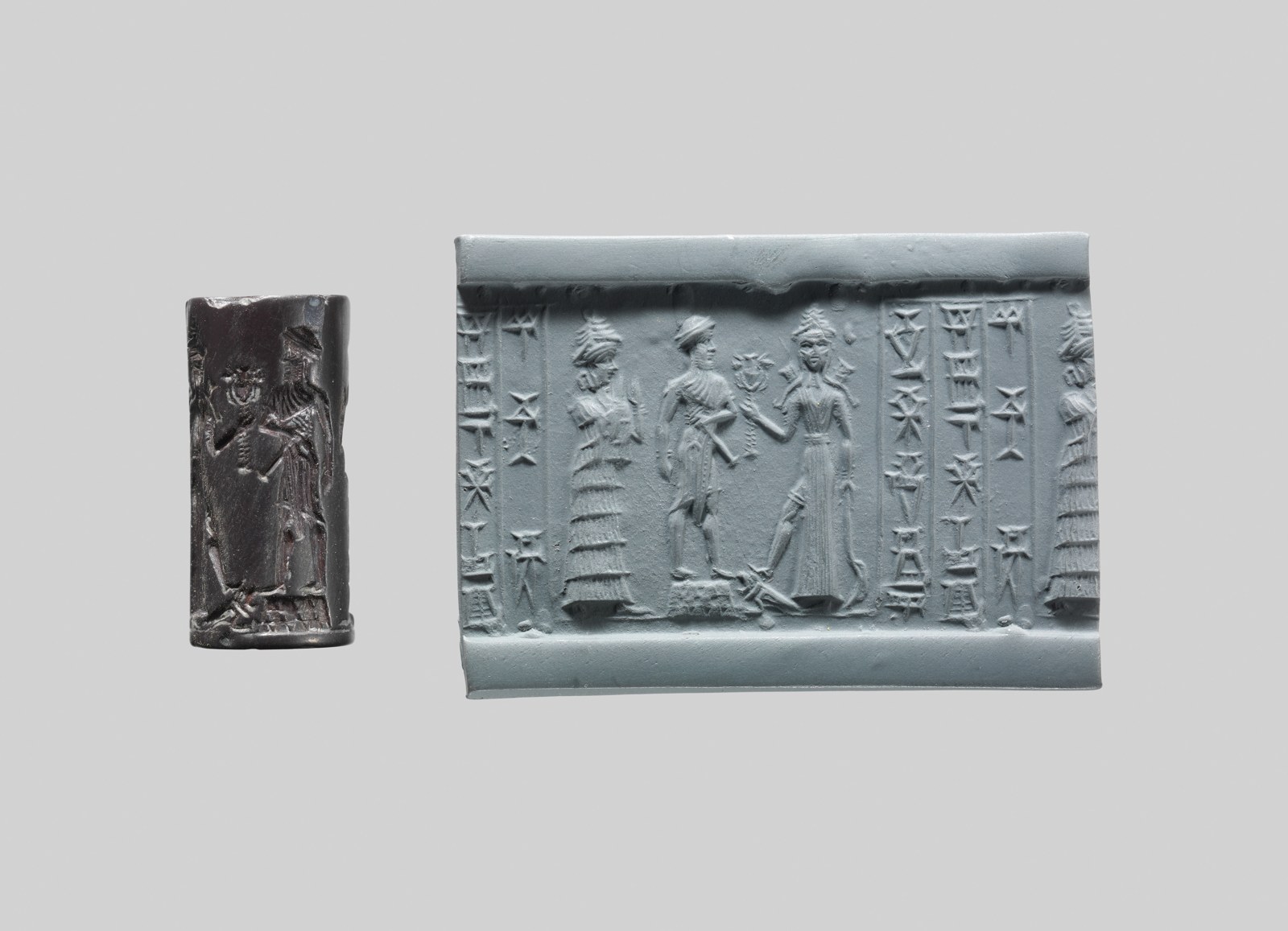
On the seal shown here, The Met identifies Ishtar by the armed figure’s appearance and setting. Look for weapons at the shoulders and the raised weapon. The modern rolled impression makes a small ancient carving readable; it is not another ancient tablet. Open the object record for the museum’s description.
The blue-and-gold lion above belongs to a different period. The Met associates the animal with Ishtar and locates the panel on Babylon’s Processional Way. A protective animal symbol and a figure identified as the goddess are different kinds of representation.
How people worshiped
A standing female worshiper from Inanna’s temple at Nippur dates to about 2600–2500 BCE. The Met identifies her as a worshiper, not the goddess. Her temple findspot helps us study dedication and sacred objects, but cannot tell us everything about the donor’s feelings or rituals.
Connections to the Bible: compare carefully
Jeremiah 7 and 44 refer to a “queen of heaven.” Begin with what those chapters actually say about offerings and the speakers’ claims. The title itself does not give a personal name. Treat any identification with a particular goddess as a further historical question, not something settled by a shared title. The related chapter links below are comparison paths.
What remains uncertain
A familiar label such as “fertility goddess” leaves out much of this material. An unnamed female figure is not automatically Inanna/Ishtar. Nor should Astarte and Asherah be treated as interchangeable names for her. Ask which language, place, period and kind of source supports each connection.
Try it yourself
Choose a passage from each Oxford translation. Write down what the goddess does, what others ask of her, and what changes by the end. Then inspect the seal: which details can you see yourself, and which identifications depend on the museum’s specialist description?
Research Paths
ORACC · Inanna/Ishtar overview and bibliography · Oxford · Inana’s Descent, translation and text links · Oxford · The Exaltation, translation and text links · The Met · lament tablet · The Met · temple worshiper
Read the related chapters
Keep exploring
Temples, ritual and sacred objects →