

The Bible Directory · Ancient Religious Worlds
Shamash: Sun, Justice and Divine Judgment
Meet Shamash
For Mesopotamian worshipers, sunrise brought more than daylight: it revealed the world to a divine judge. Shamash joined the sun’s reach with the authority to judge fairly—a powerful presence in prayers, royal dedications and the search for divine guidance.
Who was Shamash?
Shamash (Šamaš) was a Mesopotamian sun god. Utu is his Sumerian name. Sippar and Larsa were major centers of his worship.
What was he known for?
Sunlight and justice. A Sumerian hymn praises Utu’s radiance and his ability to render judgments across countries.
Why was he worshiped?
Worshipers sought divine help and fair judgment. Royal prayers and inquiries also connect him with concerns about a city’s welfare, illness and political danger.
How did people relate to him?
The texts combine praise for his power with appeals for help. They preserve particular speakers and circumstances, rather than a single picture of every worshiper’s feelings.
What did worship involve?
Hymnic praise, royal temple building and requests for divine guidance. An inscription from Sippar records rebuilding his temple for the lives of a king and his brother.
What survives from the ancient world?
Hymns, temple inscriptions and images. The ceramic object below is identified by the museum as Shamash rising above mountains; the later cylinder records work on his temple.
Explore the sources
Explore the objects, writings and questions below.

Explore the sun god through a Sumerian hymn, a named temple dedication and surviving objects.
Sunlight and the language of justice
Oxford’s translation of A hymn to Utu (Utu B) brings light, mountains and judgment into the same poem. Read lines 13–26: how does the movement of the sun become a way of describing divine authority? The hymn is a literary portrait of the god, not a report of an observed event.
Documents to investigate
A hymn: Read ETCSL 4.32.2, Utu B (English translation; the page also links a composite Sumerian text and bibliography). Notice the translation’s gaps and question marks. Missing or uncertain words should remain part of how we read the composition.
A temple dedication: Read Shamash-shuma-ukin’s inscription, ORACC Q006312 (transliteration and English translation). It names Shamash as the lord of Sippar and records work on Ebabbar. The king connects this building project with his own life and that of his brother Ashurbanipal. This is a different text from the Nebuchadnezzar cylinder pictured below.
Worth a closer look
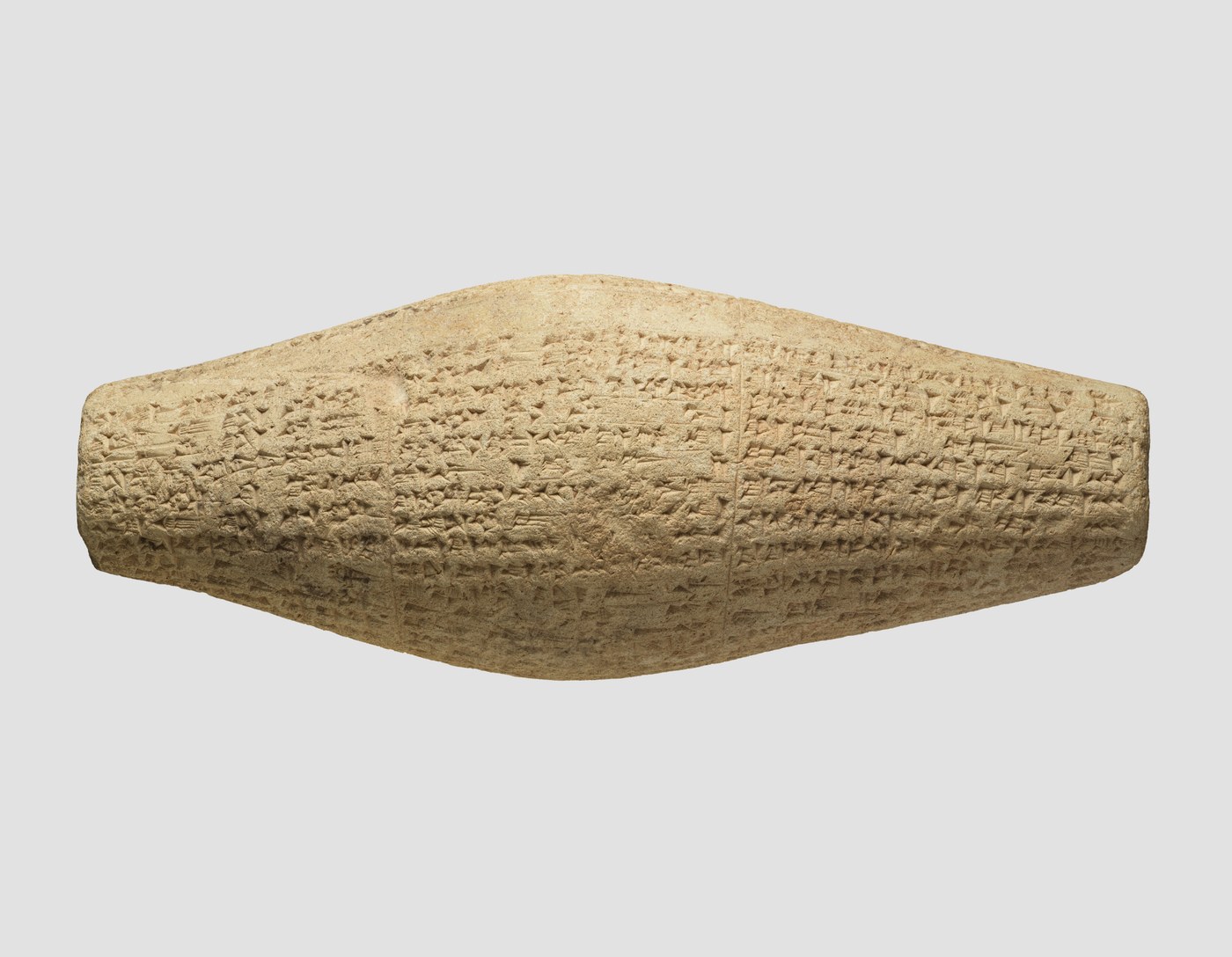
The cylinder records Nebuchadnezzar II’s rebuilding of Ebabbar at Sippar, according to the museum’s object record. It dates to about 604–562 BCE and probably served as a foundation deposit. A temple dedication could make a ruler’s support of a sanctuary part of the building itself.
Recognizing the sun god
The Met identifies the figure on this ceramic model-chariot fragment as Shamash rising over mountains. The object dates to about 2000–1600 BCE. Its scene provides a visual comparison with the hymn’s language about Utu lifting his head above mountains; it is not an illustration commissioned for that particular poem.
A temple, a king and a public claim
Compare the two building records carefully: Shamash-shuma-ukin’s text and Nebuchadnezzar’s cylinder belong to different reigns. What does each ruler choose to record about a sanctuary? An inscription can tell us what a donor wished to commemorate without supplying a complete account of everyday worship.
Connections to the Bible
Second Kings 23 describes Josiah’s removal of objects connected with sun worship, including horses and chariots. Ezekiel 8 portrays people worshiping the sun in a temple setting. Compare those passages with the Mesopotamian sources while keeping the places and speakers distinct: neither passage, by itself, identifies its solar worship with the specific cult of Shamash at Sippar.
Try it yourself
Choose one phrase from the hymn, one claim from the dedication and one feature of the ceramic image. What does each add to your picture of the sun god? Which questions about ordinary worshipers remain unanswered by a poem, a royal inscription or a small object?
Research Paths
ORACC · Ruth Horry’s Utu/Shamash overview · Oxford ETCSL · Utu B · ORACC · temple dedication Q006312 · Met · Shamash image, 48.131 · Met · temple cylinder, 85.15
Read the related chapters
Keep exploring
Temples, ritual and sacred objects →