
Gods, Goddesses and Worship
Meet the deities of the biblical world through ancient texts, temples and objects. Choose a region to explore.
 Baal with Thunderbolt stele from Ugarit ↗
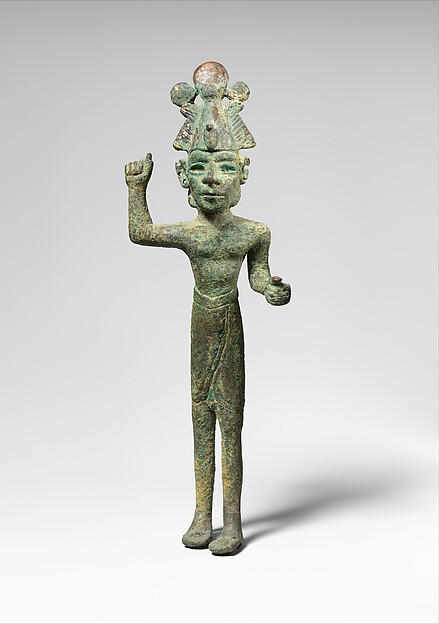 Canaanite bronze deity figure ↗
El · Athirat/Asherah · Baal · Anat · Mot · Yam
Ugaritic texts preserve a particularly rich Late Bronze Age literary world. They are invaluable for comparison, but Ugarit cannot stand in for every Canaanite city or century.
El appears as an elder divine figure; Baal is strongly associated with storm, rain, fertility, and kingship; Anat, Mot, and Yam participate in overlapping stories of conflict, death, sea, and restored order. A god could be tied to a city or landscape without being imagined as powerless beyond it. Trade, migration, and royal diplomacy carried names and cults across boundaries.
TEXTS AND SOURCES TO KNOWThe Ugaritic Baal Cycle · Aqhat · Kirta · ritual and offering texts
 Temple of Horus at Edfu with reliefs and hieroglyphic inscriptions ↗
Amun · Ra · Osiris · Isis · Horus · Hathor · Ptah · Aten
Divine prominence and relationships varied by city, dynasty, temple, and royal program. Akhenaten’s Aten-centered reign is a specific episode, not a summary of all Egyptian religion.
Egyptian deities had characteristic roles and major cult centers—Amun at Thebes, Ptah at Memphis, Ra at Heliopolis—but identities could merge, accumulate titles, and receive worship far from one city. Divine authority followed temples, kings, images, travelers, and empire; it was not contained by a modern border.
TEXTS AND SOURCES TO KNOWPyramid Texts · Coffin Texts · Book of the Dead · Heliopolitan and Memphite creation traditions
 Relief from the temple of Inanna at Nippur ↗
 Great Ziggurat of Ur, built for Nanna/Sîn ↗
An/Anu · Enlil · Enki/Ea · Inanna/Ishtar · Shamash · Sin · Marduk
Sumerian, Akkadian, Babylonian, and Assyrian traditions overlap but are not interchangeable. City gods and imperial capitals could reshape hierarchy and emphasis.
Cities maintained distinctive patron deities, yet divine families and cults crossed political frontiers. Inanna/Ishtar, Shamash, Sîn, Enlil, and Ea were worshiped in multiple places; conquest could elevate one city’s god without erasing local cults.
TEXTS AND SOURCES TO KNOWAtrahasis · Enūma Eliš · Eridu Genesis · Gilgamesh · temple hymns and god lists
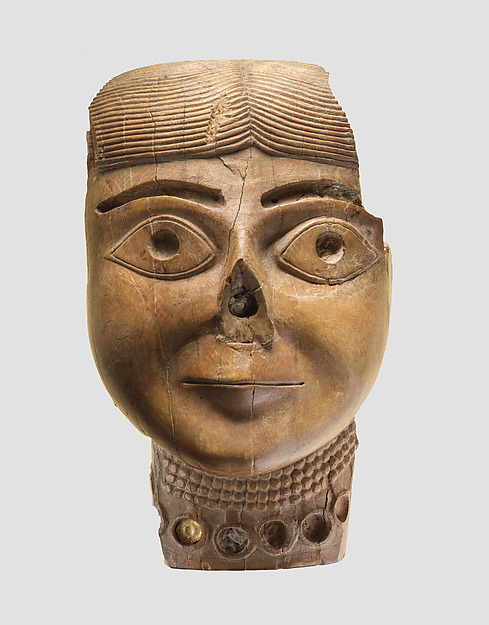 Assyrian head of a female or goddess ↗
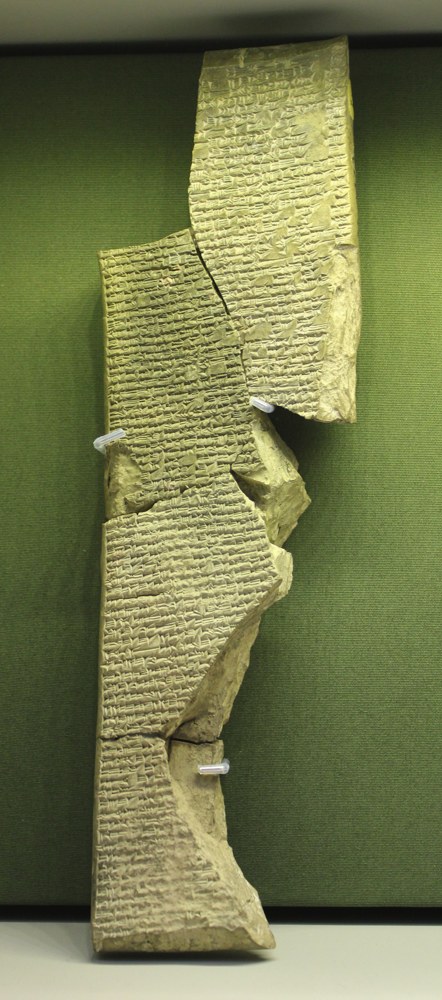 Cuneiform fragment of Enūma Eliš ↗
Ashur · Ishtar · Marduk · Nabu · Shamash · Sin
Ashur held distinctive importance in Assyrian royal ideology; Marduk and Nabu were especially prominent in Babylonian political and scribal worlds.
Ashur’s identity was closely bound to Assyria and its kings, while Marduk’s rise expressed Babylon’s political and ritual prominence. Imperial expansion transported images, priests, captives, and divine claims, but conquered communities continued to invoke their own gods.
TEXTS AND SOURCES TO KNOWEnūma Eliš and the Babylonian Akitu festival · Assyrian royal inscriptions · prayers to Ishtar, Shamash, and Nabu
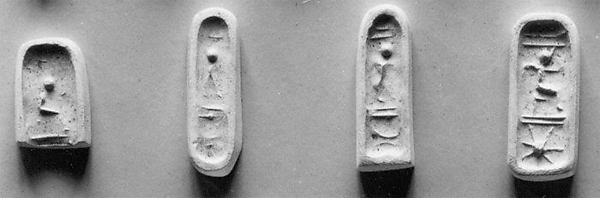 Phoenician stamp seal depicting standing figures ↗
Baal titles · Astarte · Melqart · Eshmun · Hadad · Atargatis
Tyre, Sidon, Byblos, Arwad, Damascus, and other centers had local traditions. The title “Baal” can mean “lord” and requires attention to the particular name and setting.
Melqart was especially tied to Tyre, Eshmun to Sidon, and Hadad to storm and royal power in Aramean settings. Merchants, colonies, dynasties, and bilingual inscriptions carried divine names around the Mediterranean and across inland trade routes.
TEXTS AND SOURCES TO KNOWSefire treaty inscriptions · Karatepe bilingual · Phoenician royal inscriptions · later traditions about Melqart and Eshmun
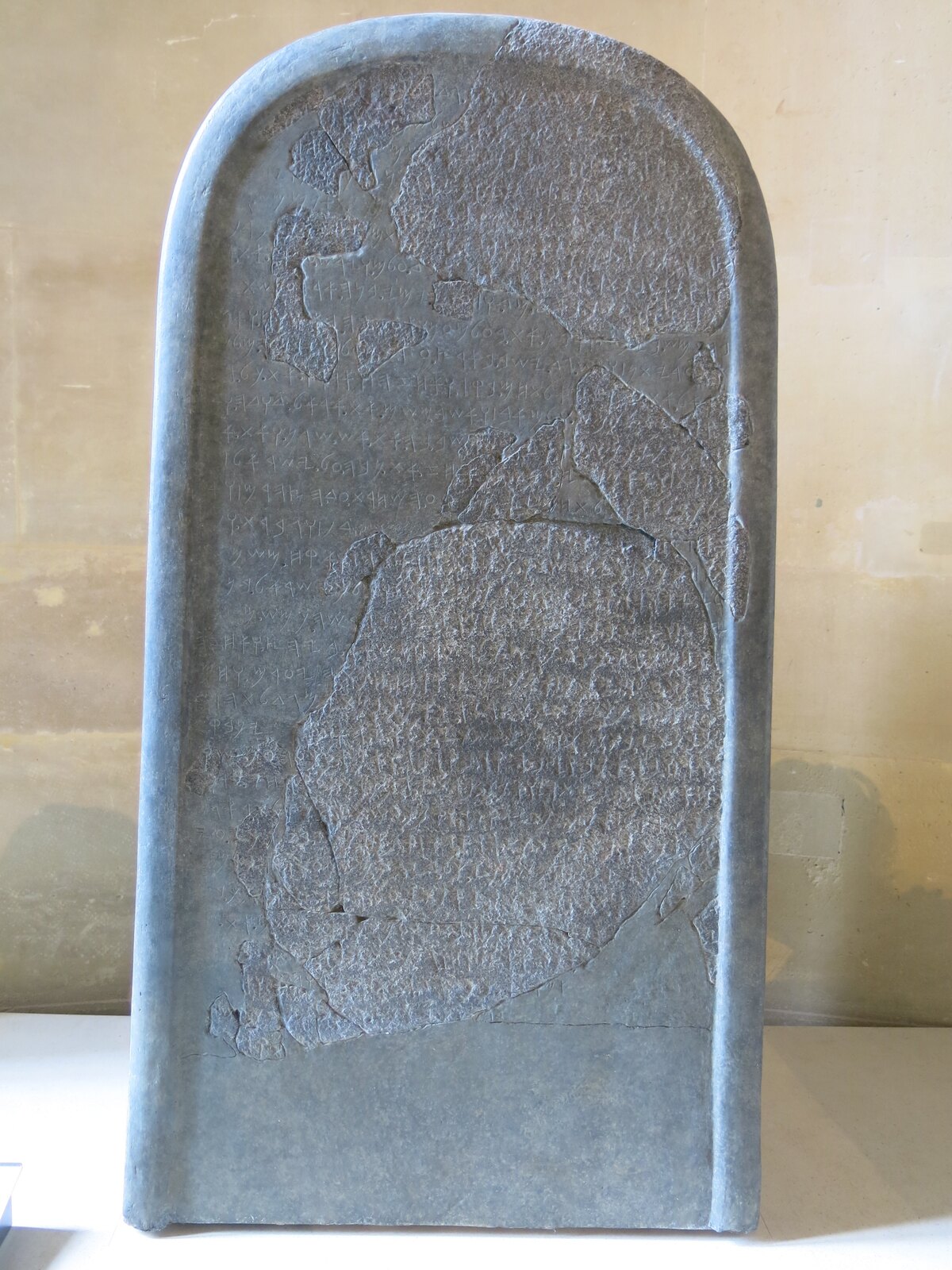 Mesha Stele naming the Moabite god Chemosh ↗
Chemosh · Milcom/Molech questions · Qos
Royal inscriptions, personal names, regional archaeology, and biblical texts provide uneven windows into these neighboring kingdoms. Spellings and identifications require care.
Chemosh, Milcom, and Qos are strongly associated with Moab, Ammon, and Edom. Royal inscriptions can describe land, victory, and defeat through a patron deity’s action, but personal names and mobile communities show that worship did not stop cleanly at political borders.
TEXTS AND SOURCES TO KNOWMesha Stele · Ammonite inscriptions · Edomite names and inscriptions · biblical texts viewed alongside regional sources
 Ketef Hinnom silver amulet from Jerusalem, inscribed with the divine name YHWH and wording parallel to the priestly blessing ↗
YHWH · El: names and titles · Asherah · The divine council
Explore worship in ancient Israel and Judah through biblical texts, inscriptions and objects, keeping local practice and historical change in view.
YHWH was central to Israelite and Judahite worship. Hebrew el can mean “god” or refer to Israel’s God; it does not always name a separate deity. Asherah appears in distinct textual and inscriptional settings. Divine council language describes heavenly assemblies rather than an individual god. Follow each link to distinguish names, titles, imagery and historical reconstructions.
TEXTS AND SOURCES TO KNOWGenesis 1–2 · Exodus 15 · selected Psalms · Deuteronomy · royal and prophetic texts · Mesha and other regional inscriptions
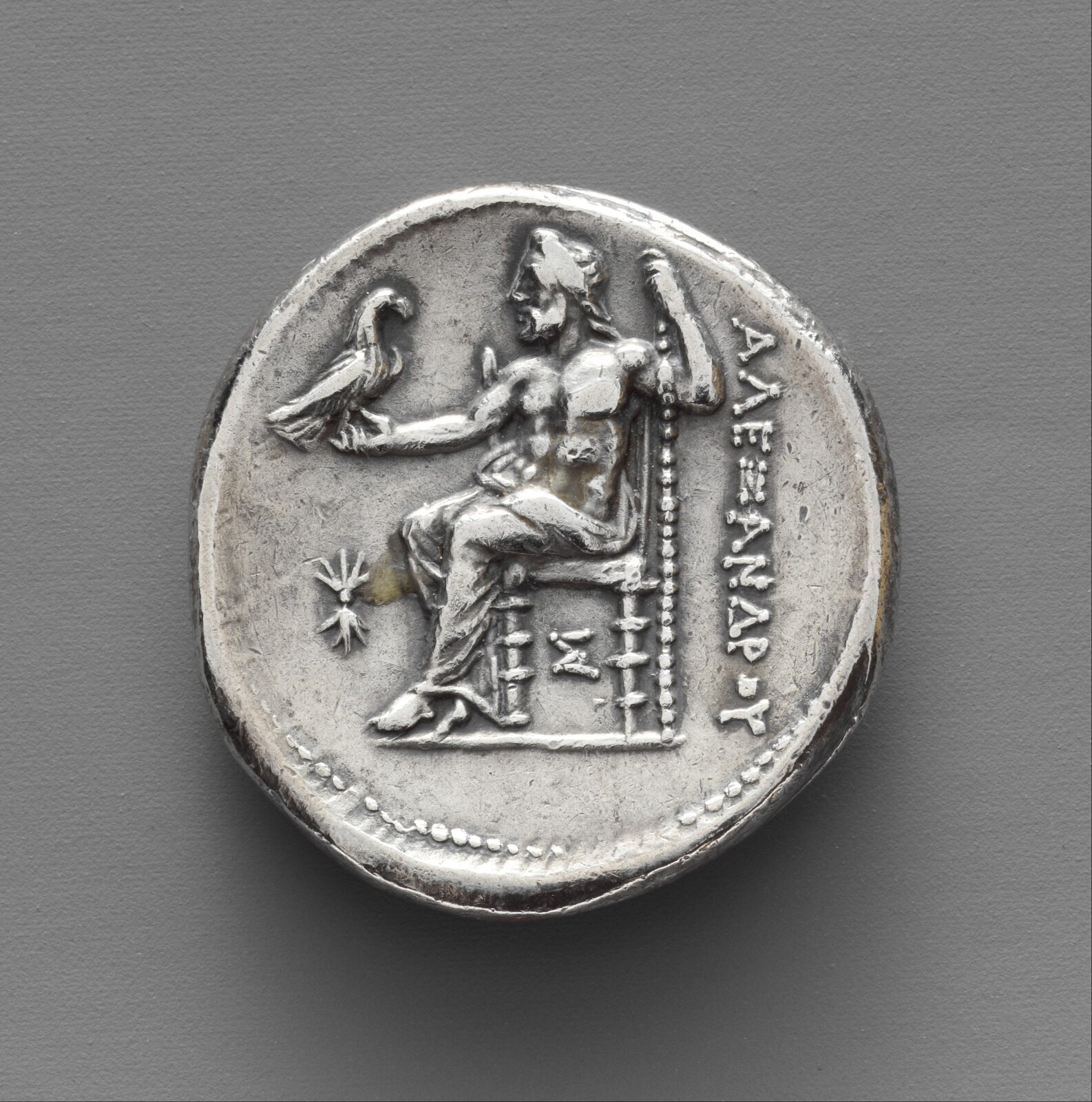 Hellenistic silver tetradrachm with divine and royal imagery ↗
Zeus · Hera · Athena · Apollo · Artemis · Hermes · Demeter · Dionysus
Greek religious life varied across poleis, sanctuaries, mystery cults, households, and Hellenistic kingdoms; local identifications and ruler cults add further layers.
Gods had recognizable spheres—Poseidon and sea, Demeter and grain, Apollo and healing or oracle—but no sphere functioned as an exclusive job description. A city might claim a patron while the same deity received worship across many cities under local titles.
TEXTS AND SOURCES TO KNOWHesiod’s Theogony and Works and Days · Homeric Hymns · Homeric epics · local sacrificial calendars and dedications
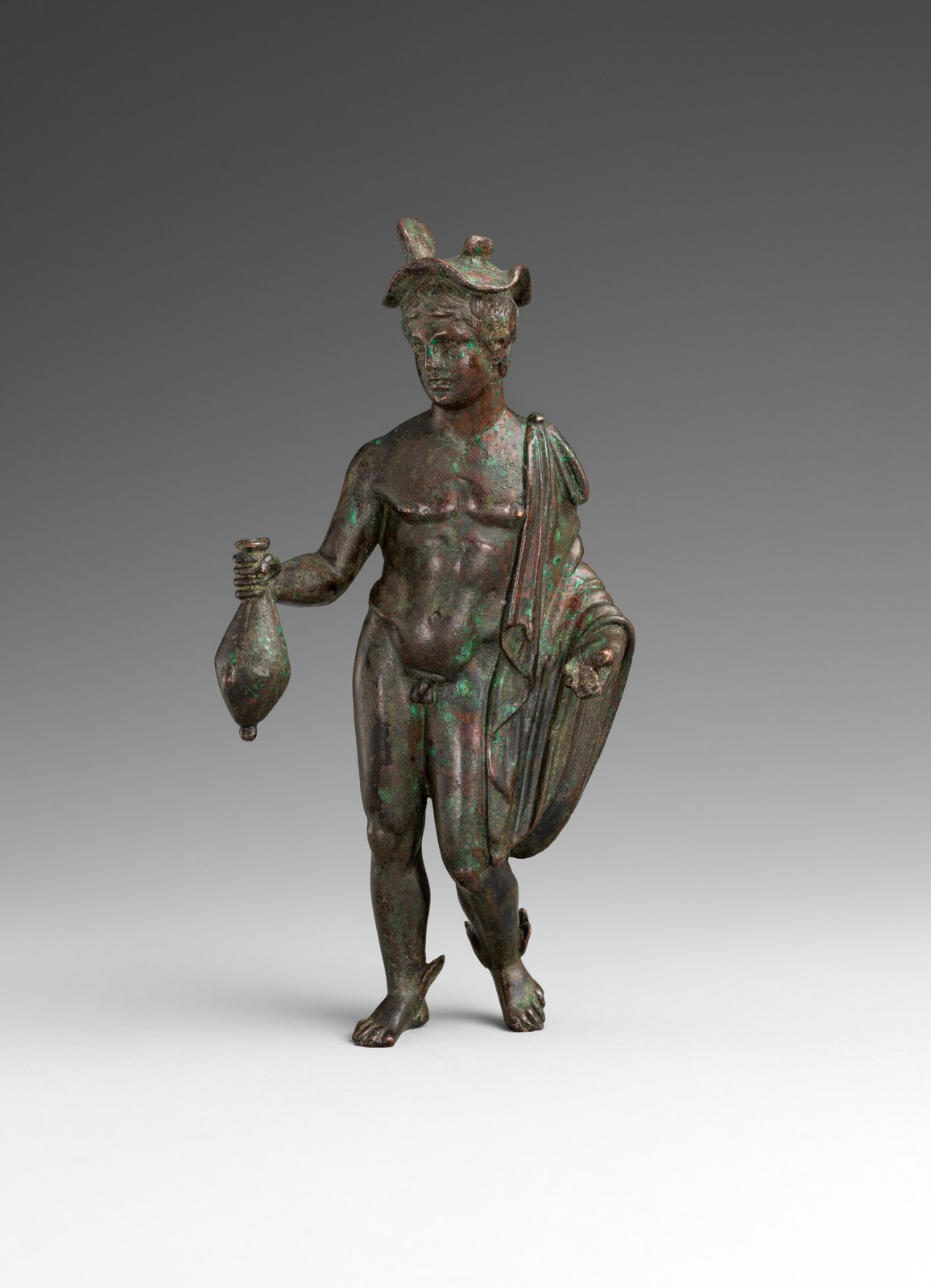 Roman bronze statuette of Mercury, a deity represented in household shrines ↗
Jupiter · Juno · Minerva · Mars · Venus · Mercury · household gods · imperial cult
Roman religion included civic priesthoods, household practice, local cults, imported deities, emperor veneration, and regional variation throughout the provinces.
Roman communities linked deities with household, city, army, agriculture, emperor, and empire. Roman worship readily identified or combined deities across cultures, while provincial cities preserved local names and festivals. Political rule encouraged shared cults but never produced total religious uniformity.
TEXTS AND SOURCES TO KNOWOvid’s Fasti and Metamorphoses · Virgil · inscriptions, calendars, vows, dedications, and provincial cult records
Shared names do not make every pantheon identical
A deity’s title, relationships, imagery, and political importance could change across Ugarit, Phoenicia, Aram, Israel, Moab, Assyria, and later periods. Comparison requires dated, local sources.
FIVE NAMES · DIFFERENT TRADITIONS
Who is who in the Canaanite religious world?
These are starting points, not a complete pantheon or an unchanging family tree. Overlapping roles do not make these figures interchangeable. Compare the place, date and kind of source.
| Deity | Start with this setting | People associated them with | Follow the material |
|---|---|---|---|
| El → | Ugarit · Late Bronze Age | Senior divine father, authority and blessing | Ugaritic narratives and prayers; the page’s figure is an unnamed comparison object. |
| Baal → | Ugarit · Late Bronze Age | Storm, rain and divine kingship | Baal Cycle, offering records and the Louvre’s identified Baal stele. |
| Asherah / Athirat → | Ugarit; later Israel and Judah | Divine family and nurturing; later blessing traditions | Ugaritic texts and Iron Age inscriptions; figurine identification remains debated. |
| Anat → | Ugarit; compare New Kingdom Egypt | Warrior power and active support for Baal in myth | Ugaritic narratives, cult records and named Egyptian images; the page shows a real tablet. |
| Astarte / Ashtart → | Levantine and Mediterranean communities | Divine patronage; roles vary by place and period | Named dedications such as Pyrgi; some proposed portraits remain uncertain. |
A helpful distinction: Asherah, Anat and Astarte are different names. A named inscription, a literary portrait and an unnamed figurine carry different kinds of information.
Ancient texts offer different portraits of creation, divine order, and human life
These texts differ in language, literary form, historical setting, and purpose. Not all are creation accounts. Comparing them requires attention to each text’s own context and to the limits of the proposed connections.
Labor, conflict, and divine society
In Atrahasis, humans are created to take over labor performed by lower-ranking gods. Enūma Eliš connects creation with Marduk’s victory and Babylon’s status. These are specifically Mesopotamian ideas; they should not be attributed to ancient Israel.
Atrahasis · Enūma Eliš · Eridu GenesisRead the texts
- Atrahasis · Tablet I: human creation ↗Translation excerpts with commentary · Stephanie Dalley excerpts, Grand Valley State University course page.
- Enūma Eliš · creation and Marduk ↗Translation in a downloadable book · Alexander Heidel, The Babylonian Genesis (1951), University of Chicago. An older edition; readings and terminology have developed.
- Eridu Genesis · The Flood Story ↗Surviving text in translation · Oxford ETCSL, composition 1.7.4. Gaps mark missing portions.
Several beginnings, not one creation story
Egyptian traditions describe emergence from primeval waters, creation through speech or thought, divine families, and the first sunrise. Heliopolis, Memphis, Hermopolis, and other centers emphasized different divine relationships. Funerary corpora then explore judgment, transformation, and continued life after death.
Pyramid Texts · Coffin Texts · Book of the Dead · temple inscriptionsRead the texts
- Pyramid Texts · James P. Allen’s edition ↗Publisher-hosted PDF · James P. Allen, The Ancient Egyptian Pyramid Texts, SBL Press. Use the index to locate Atum and creation passages.
- Book of the Dead · Chapter 17 and its Coffin Text predecessor ↗Online translation · UCL Digital Egypt. The linked Book of the Dead version develops a composition known earlier as Coffin Text 335; distinguish the later version from its Middle Kingdom predecessor.
- Book of the Dead · Chapter 1 ↗Translation of a specific manuscript version · UCL Digital Egypt, Papyrus of Nu. This is a funerary text, not a single Egyptian creation account.
- Memphite creation · Shabaka Stone ↗Translation credited to Miriam Lichtheim · Attalus. Read the damaged inscription’s discussion of Ptah, thought, and speech.
These are selected readings. Chapter 17’s earlier form is Coffin Text 335; its later wording should not be substituted for the earlier text. The links do not represent every Egyptian creation tradition.
Kingship and order within the divine world
The Baal Cycle is not a complete creation account. It dramatizes Baal’s conflicts with Sea and Death, his palace, and the renewal of royal and agricultural order. Its poetic vocabulary creates valuable comparisons with biblical poetry without making the texts identical.
Baal Cycle · Kirta · AqhatRead the texts
- Baal Cycle, Kirta, and Aqhat · translation edition ↗Library or purchase edition; not free full text · Simon B. Parker, editor, Ugaritic Narrative Poetry, with translations by Mark S. Smith, Parker, Edward L. Greenstein, Theodore J. Lewis, and David Marcus. The Baal Cycle is not a complete creation account.
Multiple biblical portraits of creation
Genesis 1 and 2 arrange creation differently and portray humans as divine image-bearers or earth-creatures formed to work and keep the garden. Psalms, Job, Proverbs, and prophetic poetry use sea, wisdom, speech, combat, birth, and building imagery. No single passage exhausts the biblical creation traditions.
Genesis 1–2 · Psalms 74 and 104 · Proverbs 8 · Job 38–41 · Isaiah 40–51Read the biblical passages
- Genesis 1
- Genesis 2
- Psalms 74
- Psalms 104
- Proverbs 8
- Job 38
- Job 39
- Job 40
- Job 41
- Isaiah 40
- Isaiah 41
- Isaiah 42
- Isaiah 43
- Isaiah 44
- Isaiah 45
- Isaiah 46
- Isaiah 47
- Isaiah 48
- Isaiah 49
- Isaiah 50
- Isaiah 51
Complete chapters in the Directory’s KJV text. Read each passage in context before comparing its imagery.
Genealogies, ages, transformations
Hesiod traces generations of gods and contests for rule; later Greek and Roman authors retell cosmic beginnings, human ages, flood traditions, and transformations for their own literary settings. These texts illuminate the Mediterranean world of later Judaism and early Christianity.
Hesiod’s Theogony and Works and Days · Ovid’s MetamorphosesRead the texts
- Hesiod · Theogony ↗Online translation · Gregory Nagy (lines 1–115), J. Banks (116–1022), adapted by Nagy; Harvard Center for Hellenic Studies. Begin at line 116 for cosmic beginnings.
- Hesiod · Works and Days ↗Online translation · Gregory Nagy, Harvard Center for Hellenic Studies. Compare the human ages at lines 109–201.
- Ovid · Metamorphoses, Book I ↗Online translation · A. S. Kline, Poetry in Translation. Begin with Book I, lines 1–88, for cosmic beginnings and human creation.
Beliefs varied inside every culture
Egyptian mortuary texts are unusually extensive, but Mesopotamian, Greek, Roman, Israelite, and Judahite sources also address burial, ancestors, the underworld, memory, judgment, and hope in different ways. Elite tomb texts do not automatically describe what every person believed.
Tombs · funerary texts · grave goods · inscriptions · poetic descriptionsRead the texts
- Read a funerary text · Book of the Dead, Chapter 1 ↗Manuscript-specific translation · UCL Digital Egypt. Compare the speaker’s requested movement and access rather than treating this as every Egyptian’s belief.