

The Bible Directory · Ancient Religious Worlds
Milcom: Ammon, Royal Worship and Ancient Inscriptions
Meet Milcom
Milcom’s name carried the weight of divine kingship in Ammon’s religious world. Biblical writers identify him with the Ammonites; fragmentary local inscriptions bring us closer to their own voices, while leaving much of his worship beyond recovery.
Who was Milcom?
A god associated with Ammon, also spelled Milkom. Biblical passages identify him as an Ammonite deity; a partly restored name in the Amman Citadel inscription is commonly read as Milkom.
What was he known for?
His association with Ammon and royal religion is clearer than any specialized role in nature. Assigning him a precise domain would go beyond what these sources securely establish.
Why was he worshiped?
The surviving inscription connects divine authority with building, protection and well-being, though its damaged condition limits interpretation.
How did people relate to him?
A possible divine address or building dedication conveys authority and protection. It does not preserve a full account of worshipers’ emotions.
What did worship involve?
Texts and objects place Ammonite religion within public building and local religious practice. A complete sequence of ceremonies specifically for Milcom cannot be reconstructed from this material.
What survives from the ancient world?
Biblical passages, fragmentary inscriptions and Ammonite sculpture. None of the sculptures used in comparison should be treated as a securely named portrait without an identifying inscription.
Explore the sources
Explore the objects, writings and questions below.

Explore Milcom through ancient writing, surviving objects and the questions they leave us.
A name in a damaged inscription
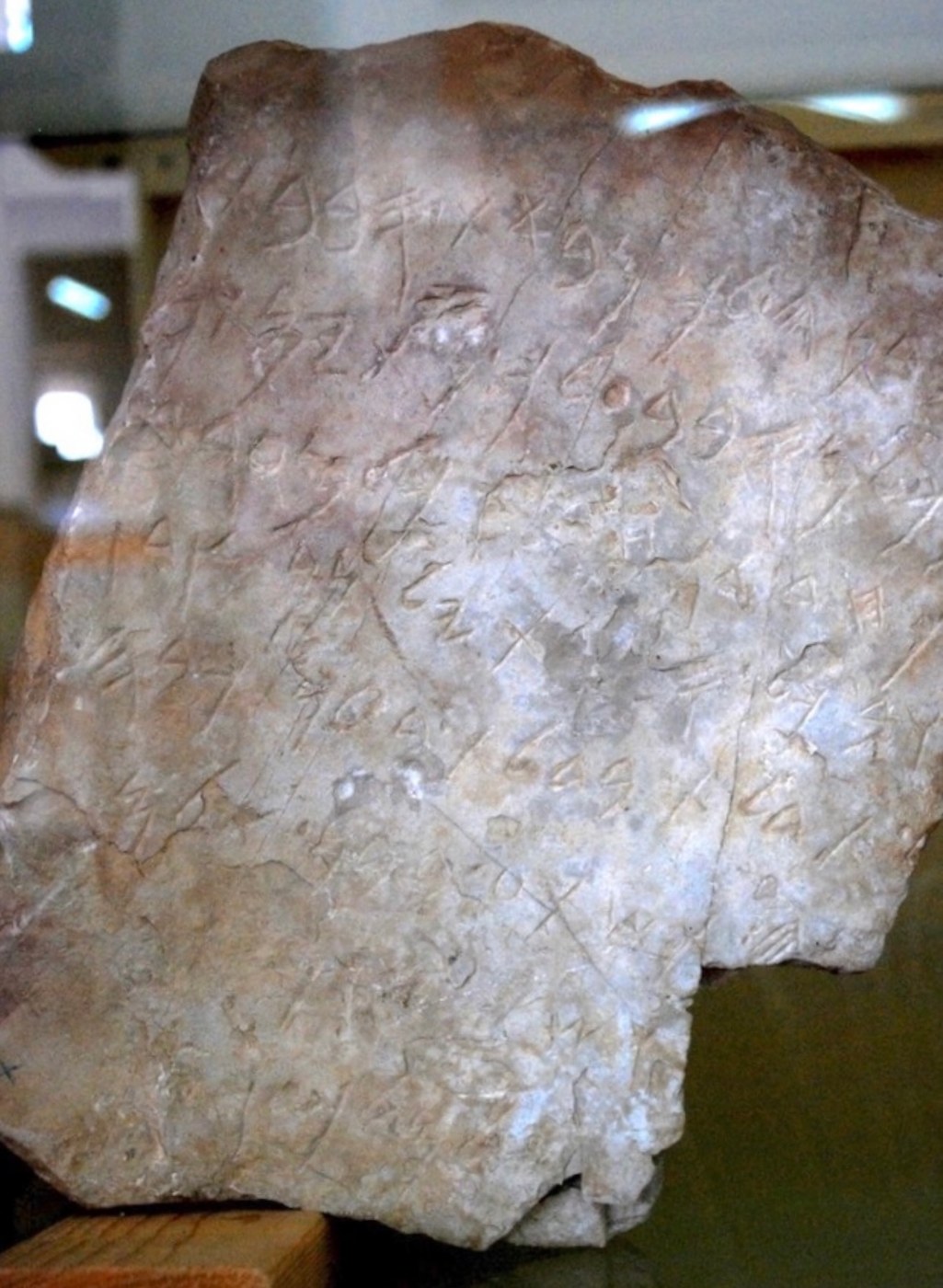
USC’s West Semitic Research Project introduces the Amman Citadel inscription and provides an English translation. Notice the brackets at its beginning: the divine name is partly restored. The project discusses both a building inscription and an oracle or instruction associated with Milkom as possible ways to understand it.
Documents to investigate
Open the eight-line translation. Mark every missing or uncertain passage before summarizing it. References to entrances, columns and a portico support an architectural setting, but the missing portions prevent certainty about the text’s original purpose. A restoration belongs in the reader’s view of the source, not hidden behind a smooth paraphrase.
Worth a closer look
The photograph shows the Amman Citadel inscription itself. Its broken edges are part of the historical problem. Compare this independently licensed museum photograph with the specialist image and discussion at USC; the two photographs are separate works, not interchangeable image permissions.
Milcom within Ammonite religious life
Tyson’s study of Ammonite religion examines inscriptions alongside artifacts from known archaeological contexts. His historical overview also discusses monumental inscriptions, seals, royal names and sculptures. These materials concern Ammonite society broadly; a sculpture’s regional origin alone does not identify the deity it depicts.
Connections to the Bible
First Kings 11 and Second Kings 23 name Milcom in accounts of foreign worship and reform. Read the passages as biblical portrayals alongside the local inscription. Milcom, Molech and the ordinary word for king raise separate linguistic and textual questions; similar spellings should not automatically collapse them into a single figure or ritual.
Try it yourself
Write one sentence describing what is visible on the stone, one describing a proposed restoration and one describing a biblical statement. Can you keep those claims distinct while explaining why scholars connect the sources?
Research Paths
USC West Semitic Research · inscription and translation · Craig W. Tyson · The Religion of the Ammonites · Craig W. Tyson · Ammon’s archaeology and history
Read the related chapters
Keep exploring
Explore Moab, Ammon and Edom →
Temples, ritual and sacred objects →