

The Bible Directory · Ancient Religious Worlds
Ra: The Sun, Creation and the Solar Journey
Meet Ra
For ancient Egyptians, the sun’s return sustained the world. Ra’s daily journey connected creation, royal authority and the renewal of life—making sunrise a cosmic event, not simply the beginning of another day.
Who was Ra?
Ra, also written Re, was a major Egyptian sun god. His forms and associations changed across places and periods; Re-Harakhty is one important combined form.
What was he known for?
Solar power, creation and the recurring renewal of the world. Egyptian texts could present him as creator and ruler, while joining him with other divine figures.
Why was he worshiped?
His continuing journey supplied a powerful image of life sustained against danger. Royal titles and religious texts connected the sun god with authority as well as renewal.
How did people relate to him?
Praise and dependence appear alongside stories of vulnerability. In the tale of Isis and Ra, even the creator needs help after a snakebite. That narrative served a healing purpose.
What did worship involve?
Hymns and offerings formed part of Egyptian religious service. Temple rites were conducted by designated personnel; they should not be imagined as everyone following an identical daily routine.
What survives from the ancient world?
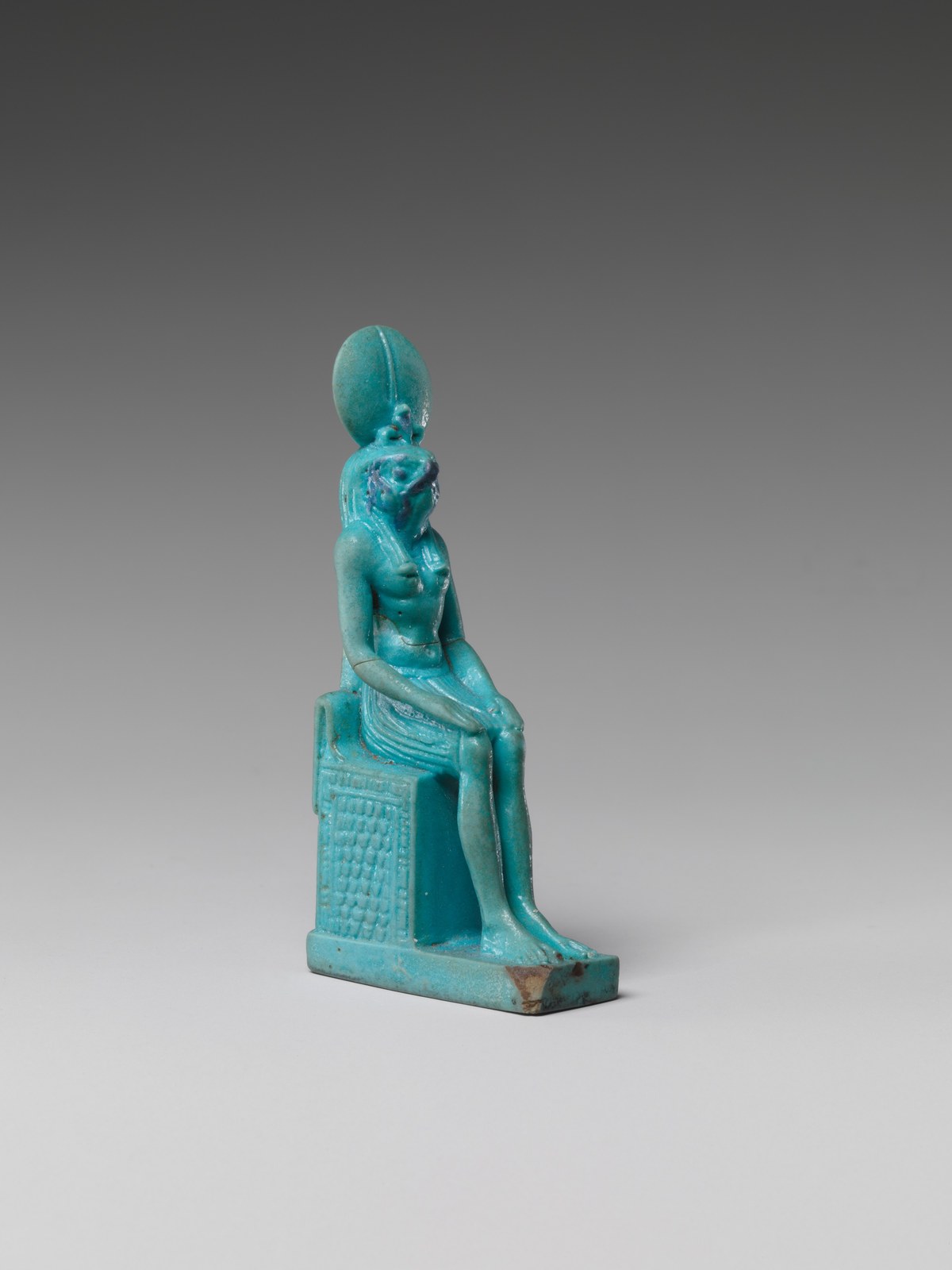
Solar images, temple and funerary texts, royal titles and hymns. The museum identifies the faience figure below as Re-Harakhty, a particular form associated with the sun god.
Explore the sources
Explore the objects, writings and questions below.
Explore Ra through ancient texts, named objects and the settings in which they were used.
One sun god, several divine forms
The small faience figure on this page is catalogued by the Met as Re-Harakhty. Its falcon head and sun disk belong to that identified form. A combined divine name expresses a particular relationship between traditions; it does not mean that every falcon-headed Egyptian image is Ra.
Documents to investigate
Read UCL’s translation of Isis and the Name of Ra, with transliteration. The story survives in Ramesside healing sources: Isis gains access to Ra’s hidden name after he is bitten. Read its concluding healing instructions as well as the dramatic narrative. The text’s practical setting matters.
A text that comments on itself
Book of the Dead chapter 17 includes statements about Ra followed by alternative religious explanations. UCL identifies its version as a compilation from several manuscripts, not a transcription of one perfectly preserved papyrus. Compare the opening sections and note how the commentary changes the way a reader encounters the words.
Worth a closer look
Look closely at the object record and additional views. The statuette dates to the Ptolemaic Period, 332–30 BCE. Keep that date attached to the image when comparing it with earlier compositions: an image and a text can illuminate related traditions without belonging to the same century.
Praise, offerings and the daily return
UCL’s account of daily temple service explains offerings and gestures of adoration through named surviving sources. Its examples include a man praising Ra on a stela. Use the page to distinguish the broad framework of temple service from the particular deity, place and period of each example.
Connections to the Bible
Exodus 12 speaks broadly of judgments against Egypt’s gods. Ezekiel 8 portrays sun worship in a different setting, Jerusalem. Neither passage supplies a list matching individual plagues to Ra or other Egyptian deities. Read the Egyptian material as historical context, and identify separately what each biblical passage actually names.
Try it yourself
Compare a solar image, a healing narrative and a funerary composition. What does each show Ra doing? Which conclusions require you to know the date, genre or purpose of the source?
Research Paths
UCL · read Isis and the Name of Ra · UCL · read Book of the Dead, chapter 17 · Harvard Digital Giza · Egyptian religion in context
Read the related chapters
Keep exploring
Temples, ritual and sacred objects →