

The Bible Directory · Ancient Religious Worlds
Nabu: Writing, Wisdom and the Divine Scribe
Meet Nabu
Writing was an instrument of knowledge and power, and Nabu was its divine patron. His worship connected scribal expertise with royal authority, while prayers and dedications sought from the god of wisdom the blessings of health, long life and a secure household.
Who was Nabu?
A god of writing and wisdom whose major center was Borsippa, near Babylon. Babylonian tradition closely connected him with Marduk, presenting him as Marduk’s son.
What was he known for?
The work of the divine scribe: writing, knowledge and the recording of destinies. The stylus used to impress signs into clay was his characteristic symbol.
Why was he worshiped?
His worship reached beyond scribes. A dedication from Nimrud seeks long life, health and well-being for the donor’s household and people.
How did people relate to him?
Prayers and dedications portray a powerful patron approached for help. These give us particular voices and situations, rather than a record of everyone’s feelings.
What did worship involve?
Temple dedications and prayers were part of his worship. At the Babylonian New Year festival, Nabu’s image traveled from Borsippa to Babylon.
What survives from the ancient world?
Inscriptions, prayers, temple remains and images. The monument below shows a dragon associated with both Nabu and Marduk. It is a divine symbol, not a portrait. A linked temple statue provides a different kind of comparison.
Explore the sources
Explore the objects, writings and questions below.
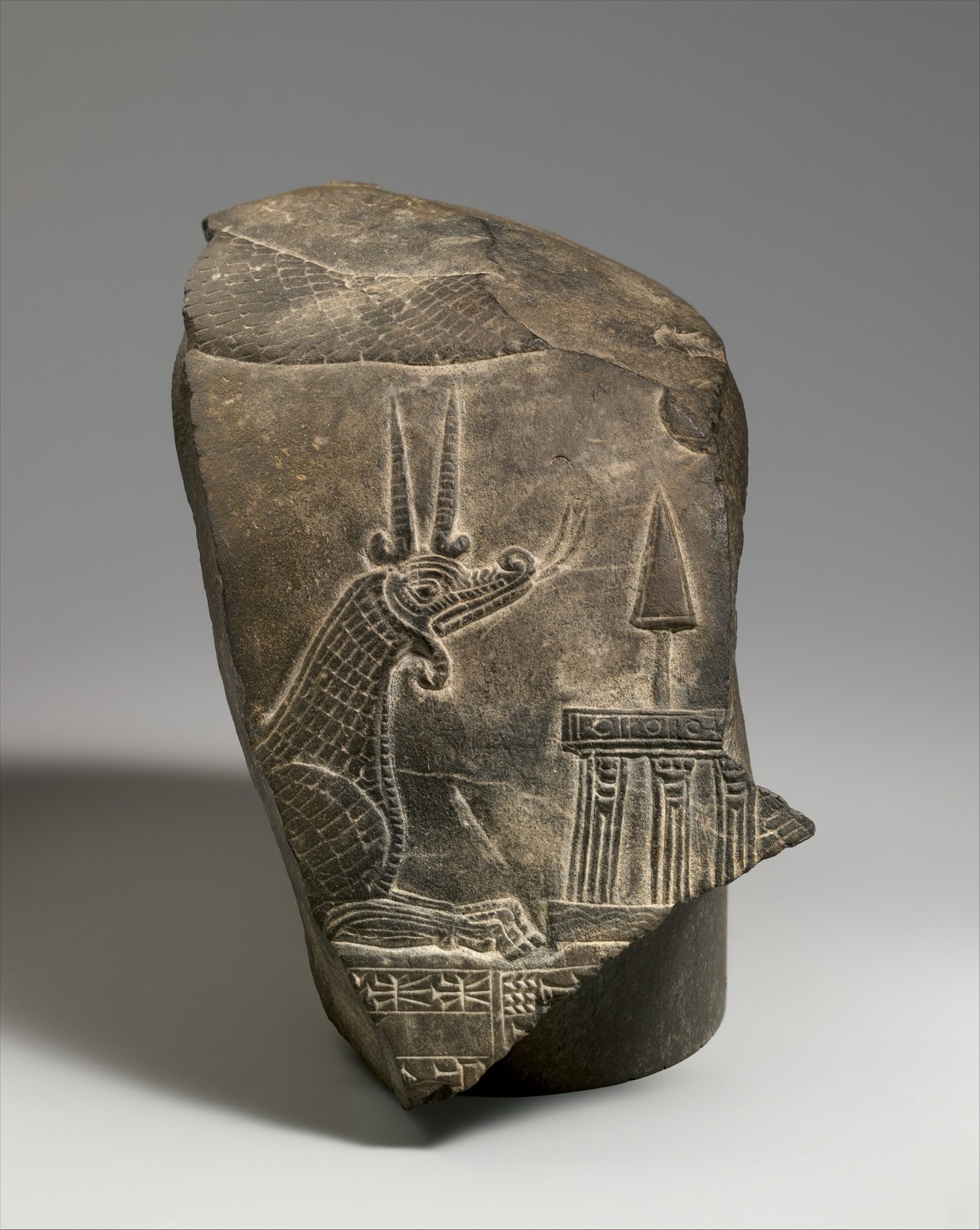
Begin with a city and a writing tool
Johanna Tudeau’s overview introduces Nabu as the patron of Borsippa and a god of writing and wisdom. Aline Tenu’s French archaeology resource explains his stylus symbol and his connections with Babylon. These associations help place him in a world where writing served temples, rulers and learned specialists.
Documents to investigate
A dedication asking for well-being: Read the inscription in ORACC’s Royal Inscriptions of Assyria edition, Q004782 (transliteration and English translation). Bēl-tarṣi-ilumma dedicates the statue for royal patrons and his own well-being. Look at lines 8b–12b: what does the donor ask for, and whom does he address?
A royal literary dialogue: Read SAA 3, text 13: Dialogue Between Assurbanipal and Nabû (transliteration and English translation, State Archives of Assyria Online). The composition places the king and god in a literary exchange. It should not be treated as a transcript of an ordinary conversation.
Eleanor Robson’s Nimrud article provides historical context and translated passages. Keep the object’s dedication, its divine recipient and the identity of the carved figure separate: these need not all name the same person or deity.
Worth a closer look
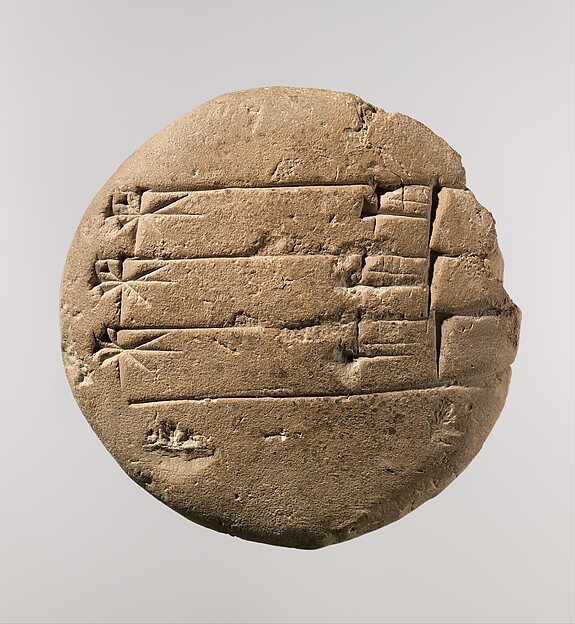
The exercise tablet pictured in this section shows the material world of scribal learning. It is a comparison object, not a prayer to Nabu or one of the documents linked above. Inspect the tablet’s museum record before drawing connections between a physical object and a particular text.
A temple statue is not always its patron god
A statue in the University of Chicago collection comes from the entrance to Nabu’s temple at Khorsabad. The University of Chicago museum guide, object 22 on printed page 46 identifies a deity holding a flowing vase, with modern restoration. Its horned headdress marks it as divine; the guide connects the flowing water with life-sustaining freshwater. It does not identify the figure as Nabu. The statue illustrates his temple’s setting, rather than supplying his portrait.
Connections to the Bible
Isaiah 46:1 names Bel and Nebo. Nebo is the biblical form associated with Nabu. Read the chapter’s portrayal alongside the Mesopotamian sources, noting who is speaking and what each text is trying to do. A prophetic passage, a dedication and a royal poem offer different kinds of information.
Try it yourself
Make three short notes: what the dedication asks Nabu to provide, how the royal dialogue presents the relationship, and what the temple sculpture actually depicts. Which claims come from writing, which from archaeological setting, and which from interpreting an image?
Research Paths
ORACC · Nabu overview and bibliography · French Ministry of Culture · Nabu and his cult · ORACC · dedication Q004782 · SAA Online · Dialogue Between Assurbanipal and Nabû · Chicago · museum guide, object 22
Read the related chapters
Keep exploring
Temples, ritual and sacred objects →