

The Bible Directory · Ancient Religious Worlds
El: Divine Authority, Names and Ancient Sources
Meet El
El presided over Ugarit’s divine family. Stories and prayers portray him as a source of authority and blessing, connecting the affairs of the gods with deeply human concerns: children, household continuity and the need for help.
Who was El?
In Ugaritic literature, El is an elder divine authority and father of the gods. In Hebrew, el can also mean “god”; not every biblical use names a separate deity.
What was he known for?
Divine decisions, creation and the well-being of people and families. He authorizes actions within the divine household. A modern chart assigning each god one exclusive department can mislead.
Why was he worshiped?
They could seek blessing, descendants and help from a wise divine father. Ugaritic narratives portray him responding to human need, and prayers invoke his favorable qualities.
How did people relate to him?
Ugaritic descriptions emphasize his kindness and paternal authority. That supports a picture of hoped-for care, rather than fear alone. Literary portraits still cannot tell us how every person experienced worship.
What did worship involve?
Prayers and invocations addressed him, and ritual texts place him among recipients of offerings. These are firmer starting points than assuming that every seated divine figurine depicts him.
What survives from the ancient world?
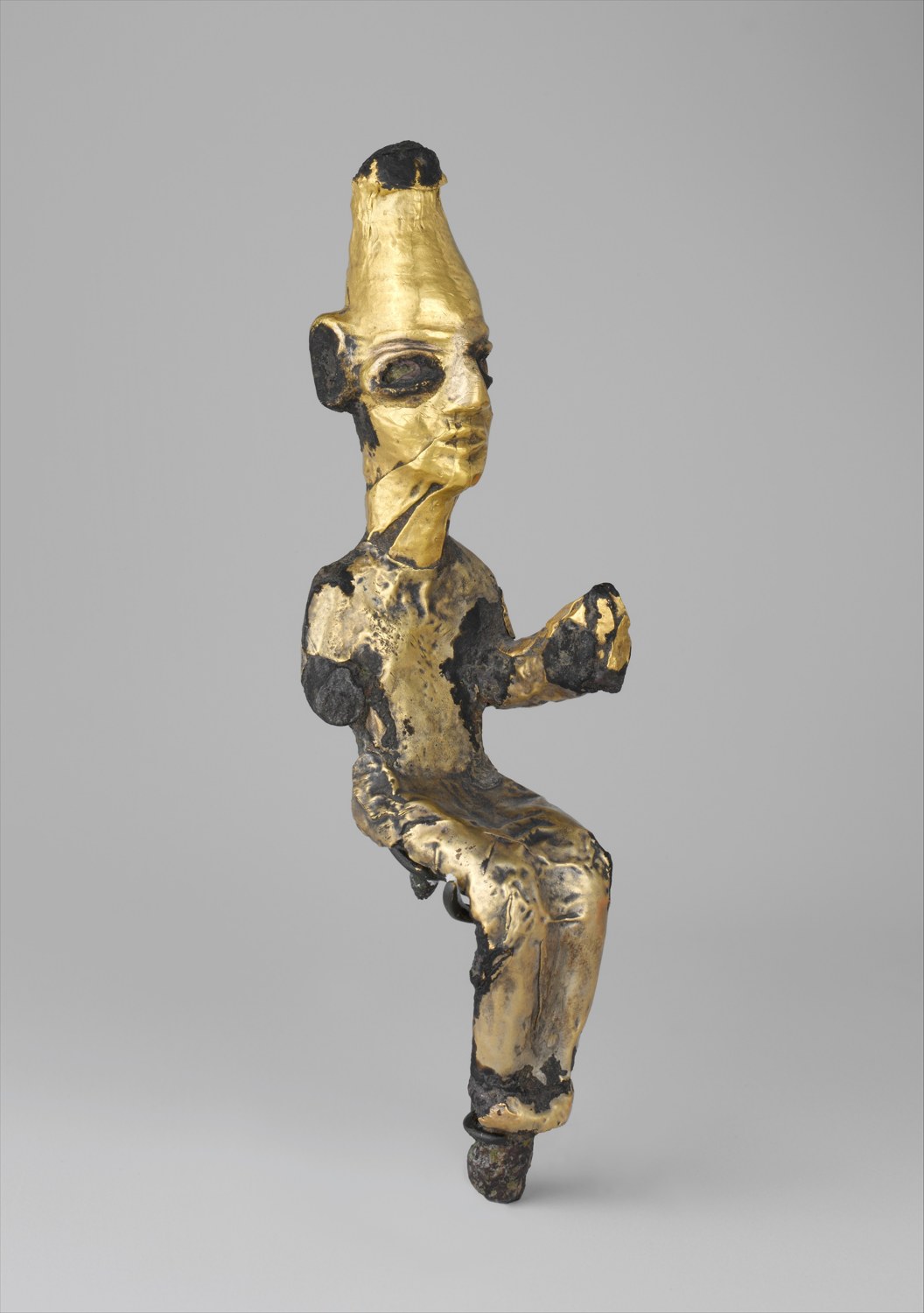
Ugaritic stories, prayers and ritual lists, with later inscriptions and personal names for comparison. The statue shown below is an unnamed comparison object; it does not independently establish El’s appearance.
Explore the sources
Explore the objects, writings and questions below.
A name and a word
El is a divine name in Ugaritic literature. Related forms also serve as words for “god” in Semitic languages. In biblical Hebrew, el therefore cannot automatically be read as the name of a deity distinct from the God of Israel. Grammar, literary setting and the whole passage matter.
Ingo Kottsieper’s WiBiLex study below explains this ambiguity. It also places Ugaritic texts alongside later inscriptions and personal names. A name containing -el is a starting point for investigation, not a complete description of its bearer’s theology.
Documents to investigate
In Ugaritic literature El occupies a senior, paternal position among the gods. The palace episode of the Baal Cycle is especially useful for examining authorization and negotiation: consult KTU 1.3–1.4 in a scholarly translation rather than reconstructing the relationships from a modern family tree.
Kirta and Aqhat offer further literary settings in which to investigate divine blessing and human kingship. These are ancient narratives, not biographies of historical gods or a comprehensive record of daily ritual. Ugaritic Narrative Poetry provides English translations of all three major narrative works.
The Ministry of Culture’s translated passage from KTU 1.2 IV is a free way into this literary world. It concerns Baal and Yamm; it should not be presented as the palace negotiation itself.
Objects: how far can an image take us?
The Met’s Enthroned deity, 32.161.45, is a Canaanite bronze with gold foil, dated approximately to the fourteenth–thirteenth centuries BCE. Its seated posture makes a useful comparison with representations of mature divine authority.
The museum’s title does not name this figure El. We therefore keep the catalogue title. No inscription on the figure is presented here that identifies it as El. Look at the posture, headgear, materials and scale before deciding what any one feature can establish.
Valérie Matoïan’s overview of Ugarit’s stone stelae supplies an archaeological comparison. Find context, material and inscriptions matter as much as resemblance to a familiar divine image.
Biblical passages and open questions
Genesis 14 uses the expression commonly rendered “God Most High”; Exodus 6 discusses divine naming; Psalm 82 depicts a divine assembly. Read each whole chapter before comparing its vocabulary or imagery with Ugarit. A parallel does not, by itself, establish direct borrowing or identify a date.
How did El traditions relate to the developing worship of YHWH in Israel and Judah? Scholars reconstruct that history from sources of different dates and genres. The available material does not give us a single eyewitness account of the process. Avoid treating one reconstruction as a dated event recorded on a tablet.
Try it yourself
Choose one biblical occurrence of el. Record whether you are looking at a common noun, a name, a title, or an uncertain case. Then compare an English translation with the Hebrew word-study entry. Keep the linguistic observation separate from a reconstruction of religious history.
Research Paths
Ingo Kottsieper · El, WiBiLex
German scholarly reference · name versus noun, Ugaritic literary sources and later religious history.
The Met · Enthroned deity
Museum record · date, materials, catalogue identification and collection history.
Valérie Matoïan · Ugarit’s stelae
French Ministry of Culture · archaeological overview of a dated local corpus.
Ugaritic Narrative Poetry · Simon B. Parker, editor
English translation edition · library or purchase access, not free full text. Includes Baal, Kirta and Aqhat; locate the tablet numbers identified above. Modern translations remain copyrighted.
Read the related chapters
Keep exploring
Temples, ritual and sacred objects →