
The Amarna World and Letters
Read the political correspondence connecting Egypt, Canaanite city-states, and the great powers of the Late Bronze Age.
MEMBER RESEARCH EDITIONSee the additional member research ↓
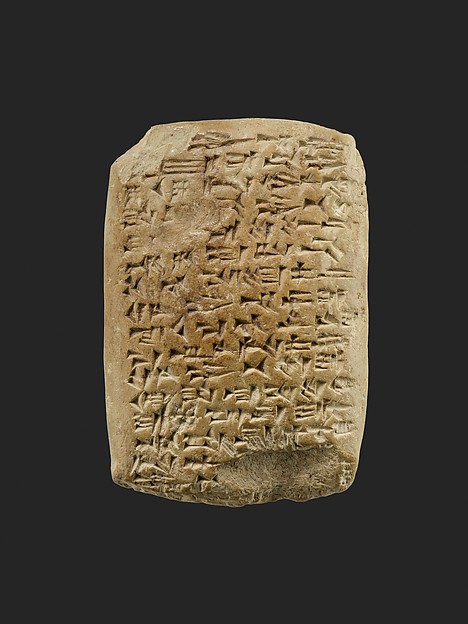
Diplomacy in the shape of a tablet
Royal letter, ca. 1347–1330 BCE. The Metropolitan Museum of Art, 24.2.12.
Public domain · The Met Open Access / CC0Open the collection record ↗Follow the changing landscape
Each map shows a particular period or geographic setting. Read its date and caption alongside the timeline.
The political world of the Amarna correspondence
Great kingdoms and spheres of influence during the archive’s broad setting; control changed during the period.
Map: Briangotts · CC BY-SA 3.0 · source and license ↗Historical periods at a glance
Dates are approximate and may vary between regions and scholarly chronologies.
Timeline
- Amenhotep III begins reign
Marriage, gifts, and status feature in correspondence with peer rulers.
- Canaanite appeals intensify
City rulers report rivals, unrest, and contested loyalty to Egypt.
- Akhenaten succeeds
Royal correspondence continues under a new king and at a new capital.
- Akhenaten’s reign ends
Akhetaten is soon abandoned as the principal royal residence.
- Tablets come to notice
Local discovery precedes excavation and the dispersal of tablets among collections.
Rulers and scribes
Amenhotep III
Receives letters from great kings and rulers within Egypt’s sphere.
Akhenaten
The archive’s findspot is his purpose-built capital, Akhetaten.
Tushratta
Writes about dynastic marriage, gifts, alliance, and royal status.
Burna-Buriash II
Corresponds as a peer ruler and disputes matters of reciprocity and diplomacy.
Šuppiluliuma I
His expansion changes the balance of power in Syria.
Abdi-Heba
A local ruler whose appeals describe political danger in Canaan.
Explore the surviving material world
Each card opens a museum, excavation project, or heritage record for the named object or site.
Letter from Tushratta to Amenhotep III
- Date
- 14th century BCE
- Where
- British Museum
A great king writes to Egypt within a relationship shaped by marriage, gifts, and claims of equality.
View the object or record ↗CLAY TABLETLetter from Burna-Buriash II
- Date
- 14th century BCE
- Where
- British Museum
Babylonia’s king addresses the Egyptian court as a diplomatic peer.
View the object or record ↗CLAY TABLETLetter from Aziru
- Date
- 14th century BCE
- Where
- British Museum
A regional ruler defends his conduct amid accusations and shifting political relationships.
View the object or record ↗CLAY TABLETLetter from a Canaanite ruler
- Date
- 14th century BCE
- Where
- British Museum
The object preserves local political communication in Akkadian cuneiform rather than a later narrative about the period.
View the object or record ↗The Amarna Letters turn international politics into individual voices.
Hundreds of clay tablets found at Akhetaten—modern Amarna—preserve correspondence between the Egyptian court, other major kingdoms, and local rulers in Canaan and Syria. Most were written in forms of diplomatic Akkadian.
Who were the ʿApiru mentioned in the letters?
The term appears to describe people in a social or political category rather than a simple ethnic name. Similarity between ʿApiru and “Hebrew” has prompted extensive discussion, but the groups should not be equated automatically.